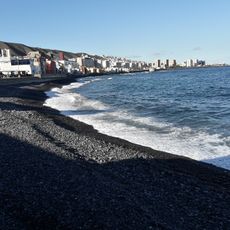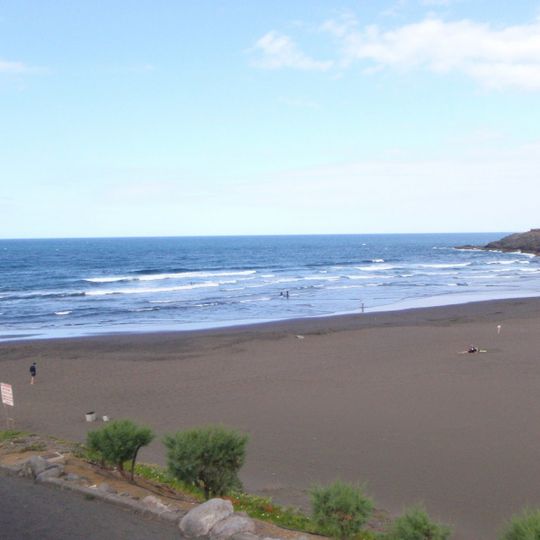
Playa del Hombre, Olive sand beach in Telde, Spain.
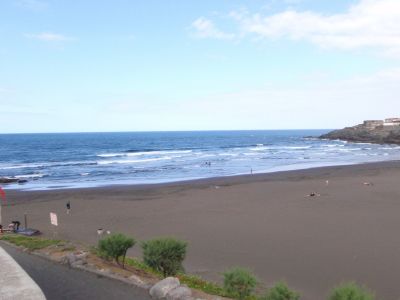
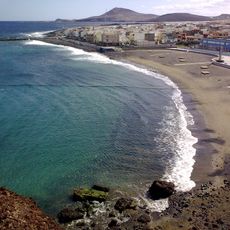
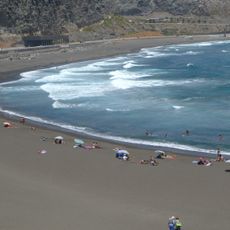
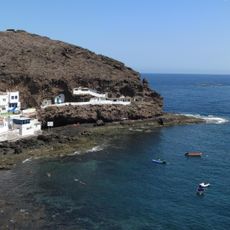
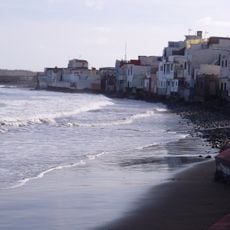
Playa del Hombre is a 270-metre-long urban beach on the east coast of Gran Canaria, in Telde, with an average width of 65 metres, a perimeter of 561 metres and an area of 16,736 m². Its dark, fine sand forms a shell-shaped cove exposed to wind and strong waves, so the red flag is flown most of the year.
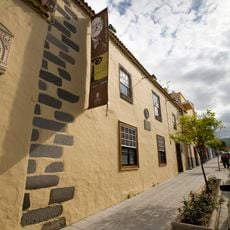
In the early or mid-1960s a construction company opened streets and installed services in the Playa del Hombre development, built the first duplexes and sold them; private owners then invested, driving further building. Streets were named after Spanish writers and artists such as Lope de Vega, Bécquer, Góngora, Quevedo and Salvador Dalí. In 1972 a local publication noted many foreign residents, mainly Swedes, and in the 1970s and 1980s a Scandinavian community lived here, some early homes built as single-storey Nordic-style houses and bungalows.
The Taiwanese writer Sanmao lived on the Telde coast between 1975 and 1985, part of that time at Calle Lope de Vega 3 in Playa del Hombre with her husband José María Quero, who died in 1979. In 2018 the Telde council created the Ruta Sanmao, and a mural in a park beside the promenade honours her.
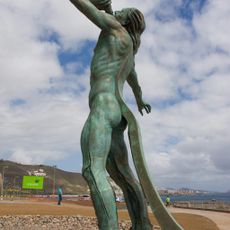
The red flag is raised most of the year because of the strong swell, so check conditions before entering the water. The 2004 seafront promenade links the beach with La Garita to the north and Salinetas to the south. Surfers head to the section known as "el Búnker", where the wave breaks to the right.
The beach gives its name to the surrounding residential neighbourhood, whose streets honour Spanish writers and artists such as Lope de Vega, Bécquer, Góngora, Quevedo and Salvador Dalí. Taiwanese writer Sanmao lived at number 3 Lope de Vega in the 1970s and 1980s; a mural near the promenade commemorates her.
The community of curious travelers
AroundUs brings together thousands of curated places, local tips, and hidden gems, enriched daily by 94,224 contributors worldwide.