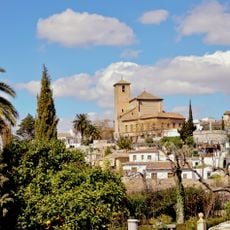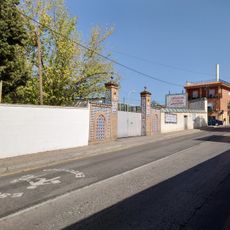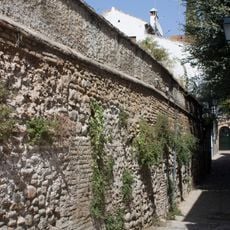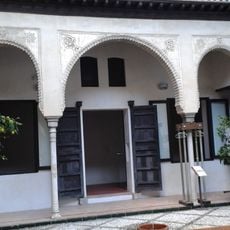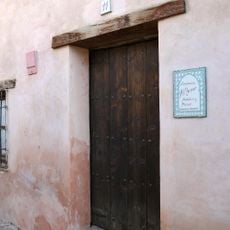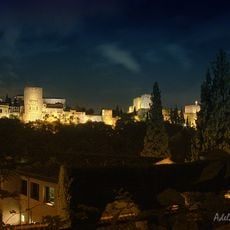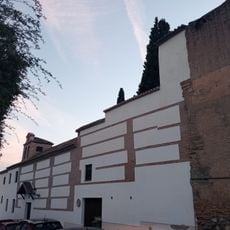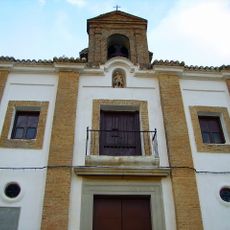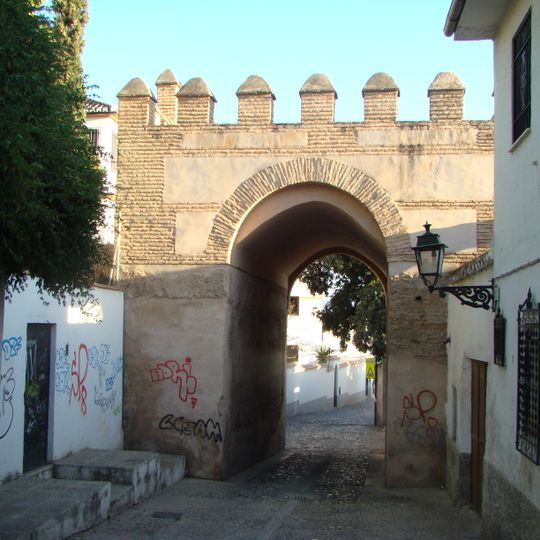
Puerta de Fajalauza, Granada, Medieval gate in Albaicin quarter, Granada, Spain
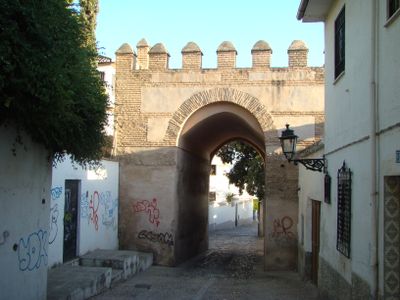
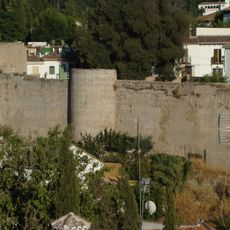
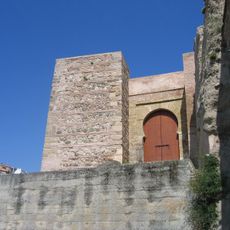
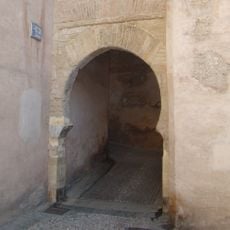
Puerta de Fajalauza is a crenellated brick tower about nine metres high, with a trapezoidal plan roughly 9.75 m long and 9.50 to 10.75 m wide, pierced by a three-metre-wide passage under a brick vault. It formed part of the Cerca de don Gonzalo, linking the Torre del Aceituno to the west with the Puerta de Hierro to the east. A blocked brick horseshoe arch on the east facade once led to the roof terrace and the adjoining stretch of wall.
The gate was built as part of the Moorish fortifications protecting the Albaicin since medieval times. It gained prominence in 1486 when Boabdil passed through after his release by the Catholic Kings, using it on his journey to reclaim his throne from his uncle.
The Arabic name Bab Fayy al-Lawza means "Gate of the Almond Pass". The gate gave its name to the pottery workshops in its surroundings and, by extension, to the popular glazed earthenware of Granada, known as loza de Fajalauza, still sold in the city.
The gate stands where Calle Cruz de Piedra now runs, on the boundary between the Albaicin and Haza Grande, and is reached on foot through the narrow lanes of the upper Albaicin. The wall it belongs to linked the Torre del Aceituno to the west with the Puerta de Hierro to the east. The passage inside the tower is about 3 m wide.
The gate appears on the Plataforma de Vico, a 17th-century engraved map of Granada, as number 45 under the name "Faxalausa". Its interior passage is 3 m wide and covered by a brick vault that seems pointed but may be a barrel vault. The eastern facade keeps a brick semicircular arch, now walled up, that once led to the roof terrace and the adjoining stretch of wall.
The community of curious travelers
AroundUs brings together thousands of curated places, local tips, and hidden gems, enriched daily by 94,671 contributors worldwide.