Puerta de Felipe V, 18th century city gate in Ronda, Spain
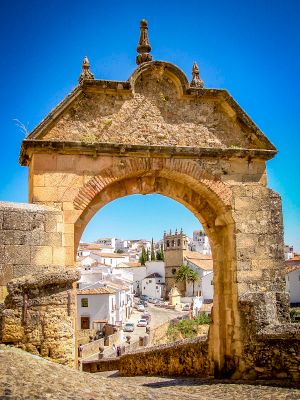
Puerta de Felipe V is a double stone archway of ashlar blocks crowned by three pinnacles, with the shell of the Anjou and the royal Bourbon coat of arms carved on its outer face. The arch springs from square jambs, framed by a band of reddish brick, and above rises a light-brown stone gable topped by a small triangular pediment.
The gate was built in 1742 during King Philip V's reign, following the collapse of a newly constructed bridge years before. It replaced an earlier Arab gate and marks the period when Ronda needed to rebuild and adapt to changing times.
The gate displays the coats of arms of both Anjou and Bourbon families, marking the shift in Spanish royal dynasties during the 18th century. These symbols remain carved into the stone and serve as a visual record of that political transition.
The gate sits on Calle Real in the town center and is easily reached on foot while exploring the historic old town. It is clearly visible and straightforward to find, especially when following the main street through town.
The stone inscription near the gate records the year 1742, when the old Arab Puerta de la Puente was replaced and enlarged under Philip V. It marks the moment Ronda widened this entrance for the heavy flow of people and goods after the first Puente Nuevo collapsed in 1741.
The community of curious travelers
AroundUs brings together thousands of curated places, local tips, and hidden gems, enriched daily by 94,762 contributors worldwide.