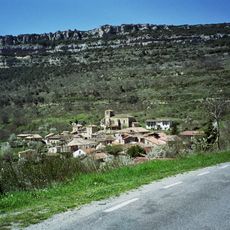
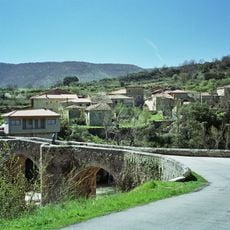
Hoces del Alto Ebro y Rudrón, Nature reserve in northwestern Burgos, Spain.
Hoces del Alto Ebro y Rudrón is a nature reserve in Burgos where the Ebro and Rudron rivers have carved deep limestone canyons through the La Lora plateau. These gorges reach depths of 250 meters in certain sections, creating a striking landscape of steep rock walls and narrow valleys.
The park was declared a protected natural area in 2008. Its canyons cut through Santonian limestone of the La Lora plateau, and the park lists thirteen geological points of interest, among them the Pozo Azul de Covanera, the Hoz de las Palancas, the folds of Tudanca and the tufa deposits at Tubilla del Agua.
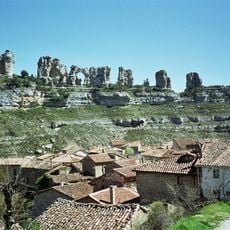
The park's name comes from the deep gorges, or hoces, cut by the Ebro and Rudrón rivers. Orbaneja del Castillo, one of its best-known villages, is built directly against the rock, and the waterfall of the río Hurón springs from the limestone above the houses. The reserve also protects thirteen geological sites, including the Pozo Azul de Covanera and the Tobas de Tubilla del Agua.
The park covers about 46,373 hectares across nine municipalities, from Alfoz de Bricia and Los Altos to Valle de Sedano, the largest at 12,278 hectares. The Burgos section of the Ebro gorge begins in the west at Villaescusa de Ebro, in Cantabria's Valderredible. Access is by road from these villages; the terrain is limestone plateau and gorge, so plan walks around the canyon rims and river crossings.
The park's inventory lists thirteen geological points of interest, among them the Pozo Azul de Covanera, the Hoz de las Palancas, the folds at Tudanca, the tufa deposits of Tubilla del Agua and the geode-bearing Monte Grau. The Cueva de Piscarciano is another of them, and the Hurón river resurgence is counted separately.
The community of curious travelers
AroundUs brings together thousands of curated places, local tips, and hidden gems, enriched daily by 94,455 contributors worldwide.