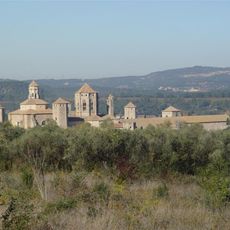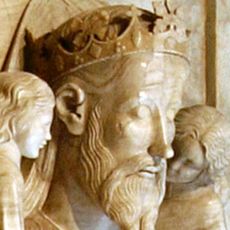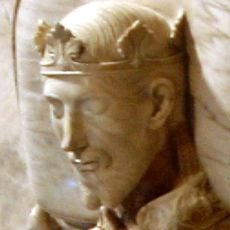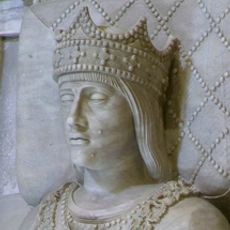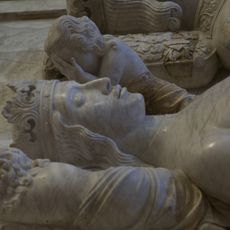
Royal Pantheon of Poblet, Royal burial site in Poblet Monastery, Spain.
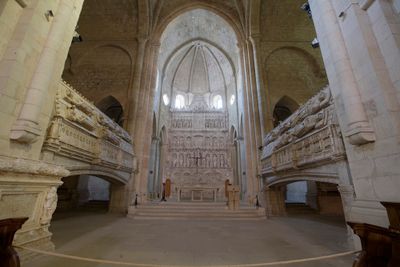
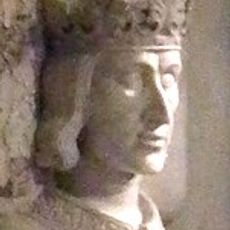
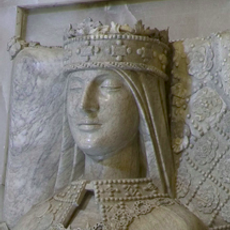
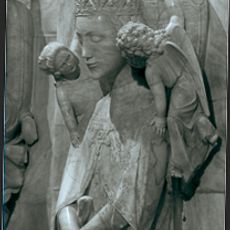
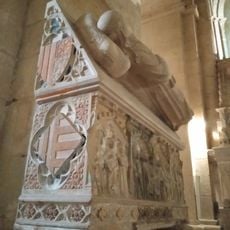
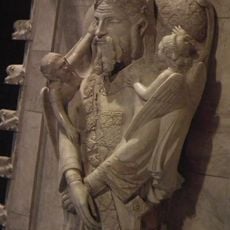
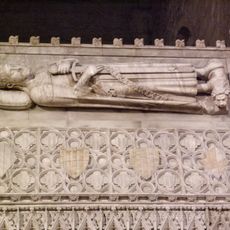
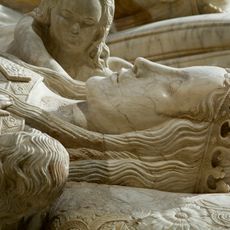
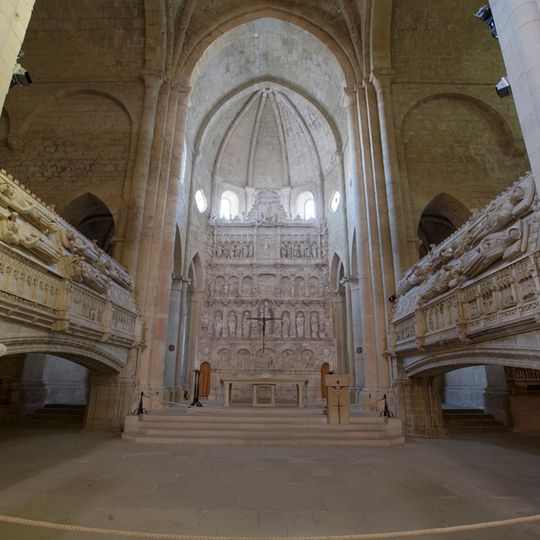
The Royal Pantheon of Poblet occupies the transept of the monastery church, where six royal tombs sit on wide segmental arches raised in 1370 so monks could pass beneath. The recumbent effigies are carved in polychromed alabaster, and above them wooden canopies with pinnacles and open gables, designed by Jaume Cascalls and made by Bernat Teixidor from 1382, were gilded and painted blue with gold stars.
In 1194 Alfonso II asked in his will, signed at Perpignan, to be buried at Poblet and wished the monastery to become a royal pantheon. The project was carried out under Pedro IV, who in 1359 engaged the sculptor Aloi de Montbrai; in 1370 segmental arches were built over the transept to hold six royal tombs, later joined by others.
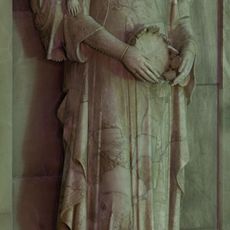
The ensemble became known as the Royal Chapel, a royal pantheon created on the initiative of Pedro IV of Aragon (r. 1336–1387). The recumbent statues on the tombs show royal dress and symbols of the Cistercian order, and Martha of Armagnac holds her queen's crown in her hands rather than wearing it, because she died in 1378 before her husband John I became king in 1387.
Access to the pantheon happens only through guided tours of Poblet Monastery during regular opening hours. It is advisable to wear sturdy shoes and watch for uneven stone floors in the old chambers.
The wooden canopies over the tombs, with pinnacles and openwork gables, were commissioned in 1382 from the carpenter Bernat Teixidor of Vimbodí to designs by the Lleida sculptor Jaume Cascalls; their inner vaults were painted blue with gold stars. A 19th-century engraving by Alexandre de Laborde records the structure before later changes.
The community of curious travelers
AroundUs brings together thousands of curated places, local tips, and hidden gems, enriched daily by 93,808 contributors worldwide.