Iglesia de Santa María de la Mesa, Gothic church in Utrera, Spain.
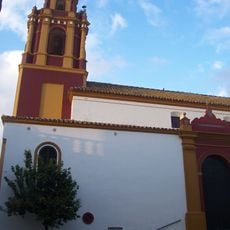
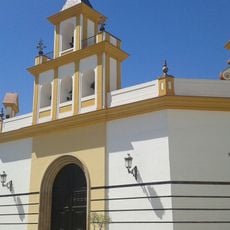
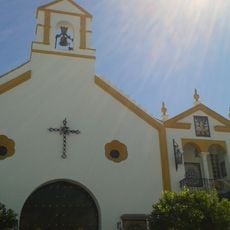
Iglesia de Santa María de la Mesa is a large church of brick, stonework and rubble masonry, with five naves separated by pointed arches on rectangular and octagonal pillars. The naves have six bays and are covered by sexpartite ribbed vaults; the crossing carries a dome on pendentives, while the main chapel and transept arms have barrel vaults. At the foot stands the Puerta del Perdón, a tower-façade built around 1550 and attributed to Martín de Gainza.
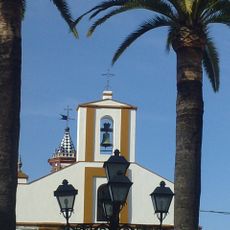
A medieval temple reformed in 1401 and again in the 16th century, when the Puerta del Perdón and the crossing were built. The tower-façade above the door is attributed to Martín de Gainza (c. 1550), and its first two bodies to Hernán Ruiz El Joven. After the 1755 Lisbon earthquake the tower was damaged and raised with two Baroque bodies by Miguel Ruiz, finished in 1777.
The name Santa María de la Mesa refers to the table of the Virgin. The main altarpiece, commissioned in 1662 from Martín Moreno and finished by Francisco Ballesteros, shows reliefs of the Virgin and of the local martyrs Esteban and Artemidoro. In a side chapel stands the 16th-century kneeling figure of Diego Ponce de León, founder and patron of that chapel.
The church is located in central Utrera and easy to find on foot. Access for visitors is normally straightforward, and you should allow time to examine the exterior stonework and interior space carefully.
The bronze clavería and hinges of the Puerta del Perdón date from the same period as the doorway itself, around 1550, and are counted among the least-known pieces of 16th-century architecture in Lower Andalusia. Look up at the tower: its two lower sections by Hernán Ruiz the Younger end in stone and wrought-iron lily-jar forms inspired by the Giralda of Seville.
The community of curious travelers
AroundUs brings together thousands of curated places, local tips, and hidden gems, enriched daily by 94,590 contributors worldwide.