Monuments of Oviedo and the Kingdom of the Asturias, Pre-Romanesque building group in Asturias, Spain
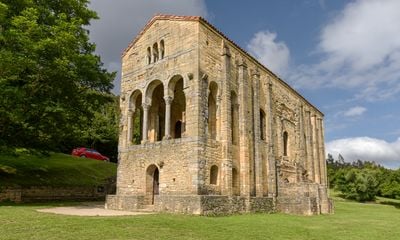
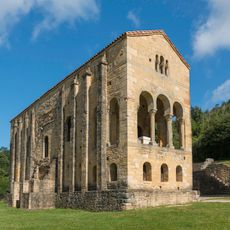
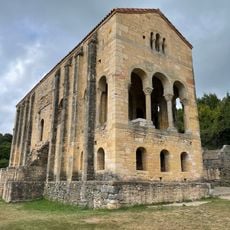
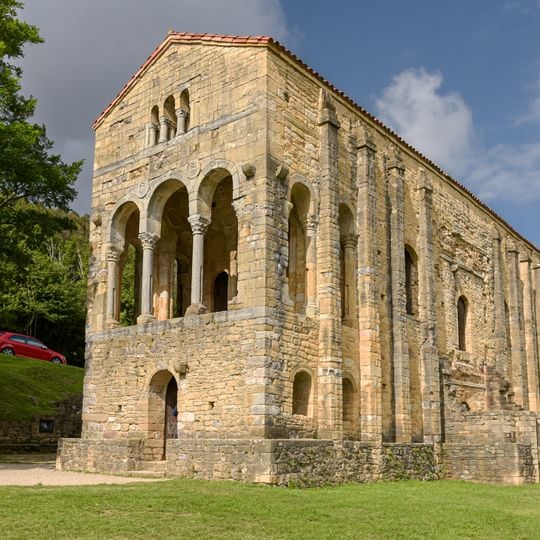
The UNESCO listing Monuments of Oviedo and the Kingdom of the Asturias covers pre-Romanesque buildings from the 9th century, including Santa María del Naranco, San Miguel de Lillo, Santa Cristina de Lena, San Julián de los Prados, the Cámara Santa and the Foncalada fountain house. Santa María del Naranco, shown in the photograph, has a rectangular stone body with a pitched roof of reddish tiles, a two-level facade with a round-arched loggia on slender columns, and buttresses along the right side.
The complex emerged during the Kingdom of Asturias period, roughly from the late 8th to early 9th century, when King Alfonso II and Ramiro I established Oviedo as their royal seat. This construction period marked a time of Christian consolidation across the region.
The UNESCO listing, first called "Churches of the Kingdom of the Asturias" in 1985, was widened in 1998 to add Oviedo's Cámara Santa, the Foncalada fountain and San Julián de los Prados. The Asturian pre-Romanesque it protects ran from the late 8th century until Romanesque art arrived from France in the early 10th.
The monuments are accessible on foot, but plan to spend several hours visiting the different locations throughout the area. Comfortable footwear is helpful since some buildings sit on slopes and elevated terrain.
Santa María del Naranco started as a royal palace but was repurposed as a church during the 10th century. The building reveals detailed stonework and architectural features that still reflect its original secular purpose.
The community of curious travelers
AroundUs brings together thousands of curated places, local tips, and hidden gems, enriched daily by 94,116 contributors worldwide.