Parque de Quijano, Public park in central Alicante, Spain.
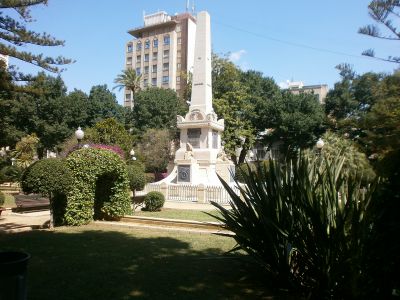
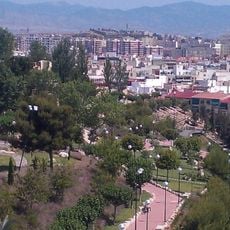
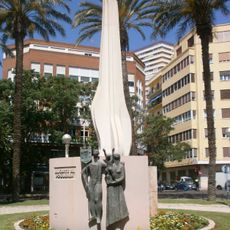
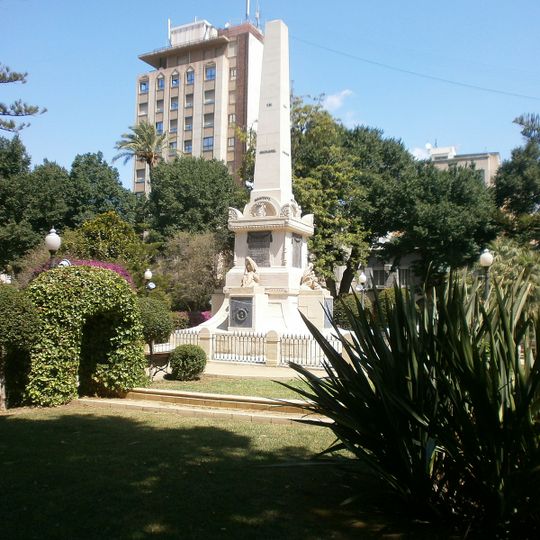
Parque de Quijano, also known as the Panteón de Quijano, occupies the interior of Plaza de Santa Teresa in Alicante's San Antón neighbourhood. Designed by architect Francisco Morell y Gómez and built between 1855 and 1857, it centres on a funerary monument to governor Trinitario González de Quijano: a large obelisk with four sculptural groups, surrounded by romantic-style gardens. An iron fence encloses the space, entered by a recessed stairway; at the back are two artificial pools, the larger decorated with a cornucopia and the smaller with a pair of frogs.
Built between 1855 and 1857, this park was created to honor Trinitario González de Quijano, the Civil Governor who led the city during the cholera outbreak of 1854. The park's design and layout reflect the urban development style of that mid-nineteenth-century period.
The park is also known as the Panteón de Quijano, and its centre holds the funeral monument to Trinitario González de Quijano, the civil governor from Getaria honoured for his humanitarian work during the 1854 cholera epidemic. The obelisk is flanked by four sculptural groups within romantic-style gardens.
The park is accessed through an iron gate with stepped entry points, making it straightforward to navigate the space. Shaded benches are distributed throughout, offering comfortable places to rest and observe the surroundings at any time of day.
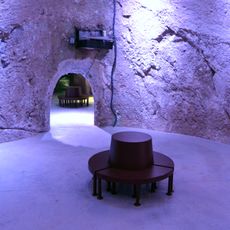
Beside the obelisk stands the so-called romantic grotto, used for years as a gardening store before the city council rehabilitated it in 2011. The park's two artificial basins carry small sculptures: a cornucopia on the larger one and a pair of frogs on the smaller.
The community of curious travelers
AroundUs brings together thousands of curated places, local tips, and hidden gems, enriched daily by 94,190 contributors worldwide.