Conjunto Dolménico de El Pozuelo, Prehistoric burial site in Zalamea la Real, Spain
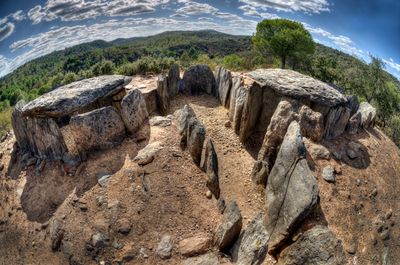
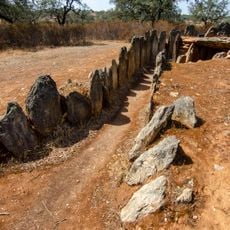
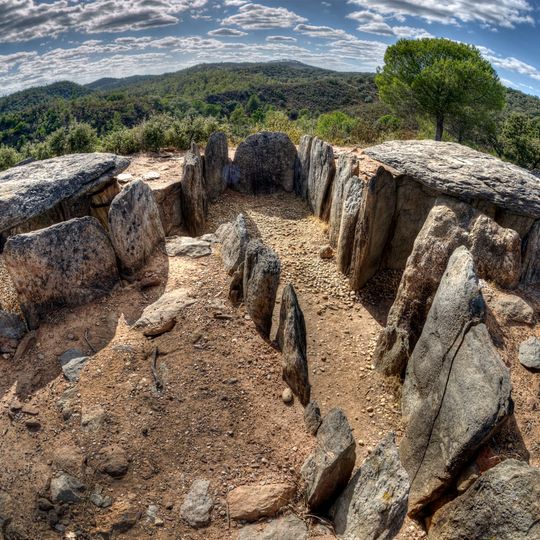
The El Pozuelo dolmen complex is an archaeological site of eleven Copper Age tombs in Zalamea la Real, Huelva. The tombs are grouped into five units: A (Los Llanetes), B (La Veguilla), C (El Riscal), D (Los Rubios) and E (Martin Gil). Each tomb has a passage and one or more chambers built with upright slate slabs; some chambers are cruciform or have central pillars, and most are covered by oval mounds edged with stone rings or dry-stone walls.
The eleven dolmens of El Pozuelo were built between 3000 and 2500 BCE, making them the earliest prehistoric architecture in the province of Huelva and the oldest on the Atlantic facade. Carlos Cerdán Márquez discovered and largely excavated the necropolis in 1946, and the site was declared a Bien de Interés Cultural in 2002.
The eleven tombs are grouped in five units (A to E), each with one or several dolmens, and were used for collective burials. The dead were placed in chambers built of upright slate slabs, with floors of packed earth over a bed of slate. Grave goods and their distribution indicate a necropolis of dispersed, individualized groups.
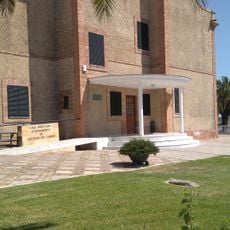
Access to the site follows a walking path that starts at the cemetery and circles around the town center before reaching the dolmens. It is best to wear sturdy shoes and expect uneven ground and hilly terrain along the way.
Dolmen 4 has a chamber 6.2 m long and 2.9 m wide, too wide for two-point support, so its vanished slate roof rested on a line of five central pillars. Dolmen 3 keeps three displaced slate capstones, and Dolmen 2 preserves a single slab in situ. The floors of the tombs are packed earth over a bed of basal slate.
The community of curious travelers
AroundUs brings together thousands of curated places, local tips, and hidden gems, enriched daily by 94,205 contributors worldwide.