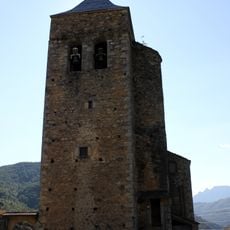
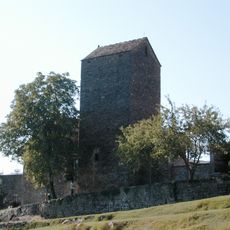
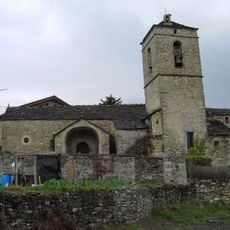
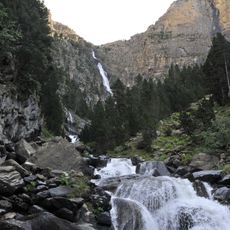
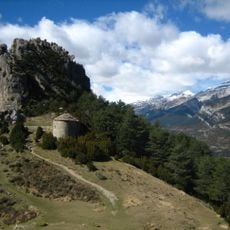
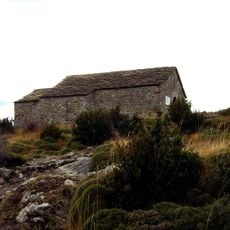
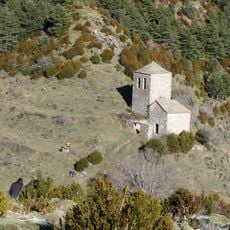
Ermita de San Urbez, Hermitage church in Cañón de Añisclo, Spain.
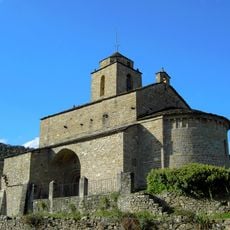
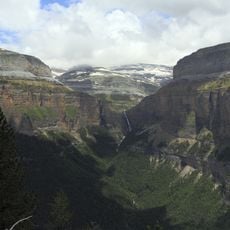
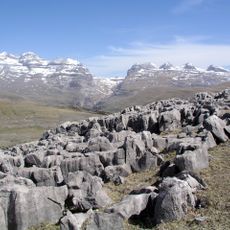
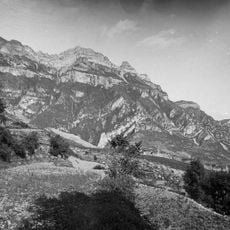
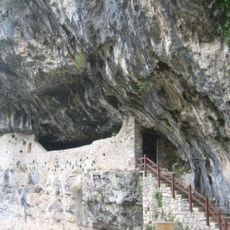
The Ermita de San Urbez is a small stone church built into a cliff in the Cañón de Añisclo, with its entrance framed by a semicircular arch. The structure is carved into the rock itself, using the natural stone wall as shelter and creating a cave-like interior space.
Tradition dates the hermitage's founding to the 8th century, when the shepherd Úrbez, said to have come from Bordeaux, is believed to have slept in the Cueva de Sestral while grazing his flock. Its masonry wall, semicircular doorway and late-Romanesque features point to the 12th century. Úrbez later moved on toward the ribera de Fiscal and Serrablo.
Four pilgrimages reach the hermitage each year: 1 May, the Tuesday after Pentecost, 14 September and 15 December, the saint's feast day. Villagers of the Quiñón (Buerba, Vio, Sercué, Nerín, Gallisué) attend Mass, sing the gozos and share wine and charity. In droughts, nine days of prayer were made from the house in Vio where Úrbez lived.
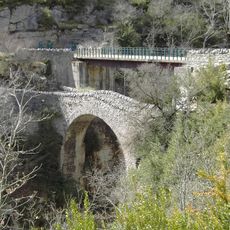
The hermitage is reached by a walking path from the parking area near Escalona, crossing the San Urbez bridge over the Bellós River. The route is straightforward and well-marked, though sturdy footwear is recommended as the ground can be uneven in places.
The saint's name is spelled Úrbez, not Urbano or Urbanus. Inside, the two joined chambers are uneven: the northern one holds mass on pilgrimage days, while the other is where tradition says the shepherd slept. Look for the triangular monolithic opening cut into the tufa on the west side.
The community of curious travelers
AroundUs brings together thousands of curated places, local tips, and hidden gems, enriched daily by 94,363 contributors worldwide.