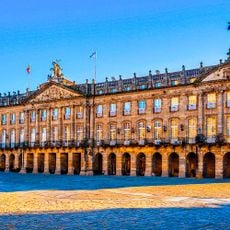
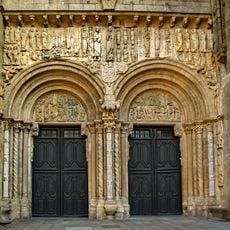
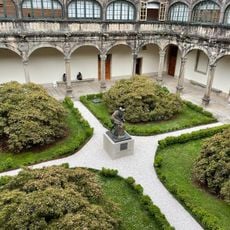
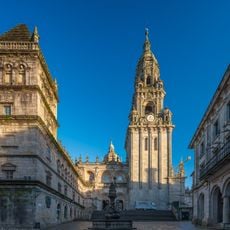
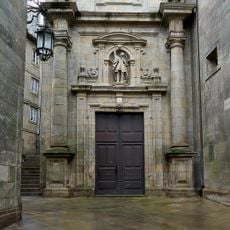
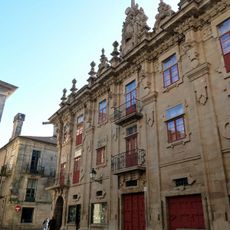
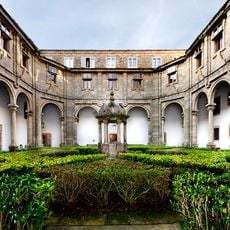
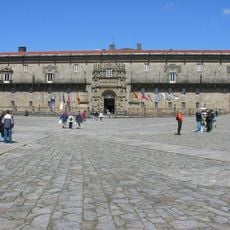
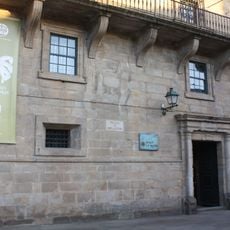
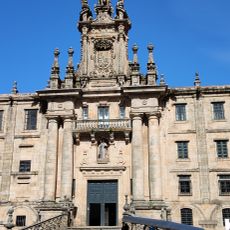
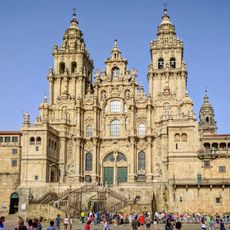
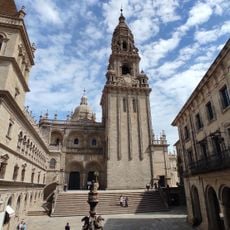
Palacio de Gelmírez, Episcopal palace in Santiago de Compostela, Spain.
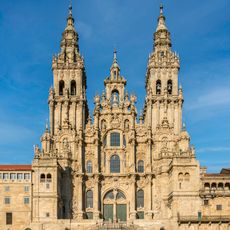
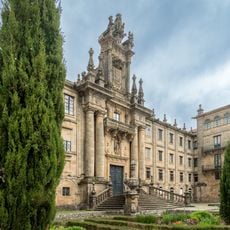
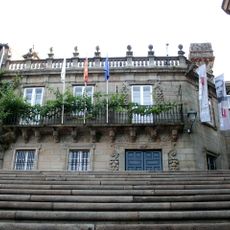
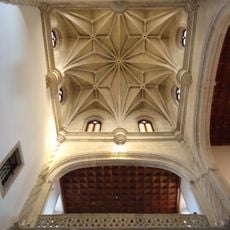
The Palacio de Gelmírez stands beside the Cathedral of Santiago de Compostela as a Romanesque structure featuring ribbed vaults, carved stone corbels, and granite windows with trilobated arches. The building contains several rooms, with the main hall stretching approximately 32 meters in length and accessed by a narrow granite staircase.
Diego Gelmírez, archbishop of Santiago, built the palace between 1120 and 1136 to replace the old episcopal residence near the Platerías façade, which dated from 830–880 and was destroyed in the 1117 revolts. Around 1180 Pedro Suárez de Deza made the first reforms, and in the mid-13th century Archbishop Juan Arias commissioned Master Boneth to add a chapel, a two-storey hall and a tower on the model of French episcopal palaces.
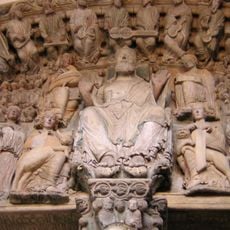
The corbels of the Salón Sinodial, carved under master Pedro Boneth between 1253 and 1266, show a banquet with kings, nobles and clergy, musicians, and angels holding a sun disc and a crescent moon. Scholars read the feast as the wedding of Alfonso IX and Berenguela, or the pilgrimage of Fernando III and Beatrice of Swabia; the diners on the capitals eat an empanada.
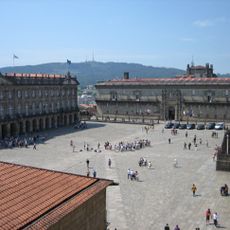
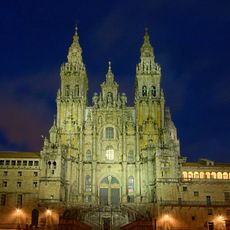
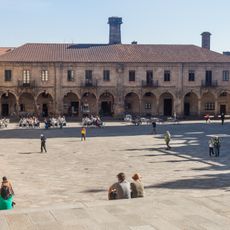
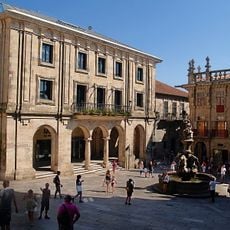
The entrance is located on Praza do Obradoiro beside the Cathedral, and visitors should expect steep granite staircases to reach the main rooms. The building can be tight to navigate with narrow passages, so comfortable walking shoes are recommended.
The corbels of the Salón Sinodial carry a banquet with kings, nobles and clergy, musicians, and angels holding a flaming sun and a crescent moon. In the capitals the diners eat an empanada. Scholars read the feast as the wedding of Alfonso IX and Berenguela, or as the pilgrimage of Fernando III and Beatrice of Swabia.
The community of curious travelers
AroundUs brings together thousands of curated places, local tips, and hidden gems, enriched daily by 94,128 contributors worldwide.