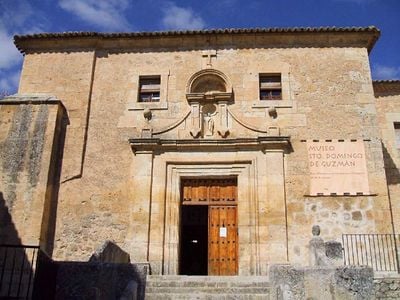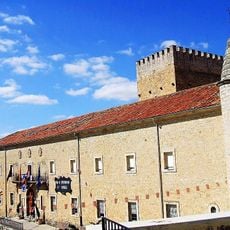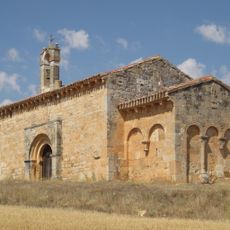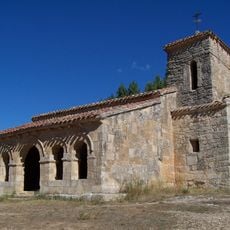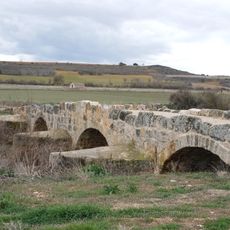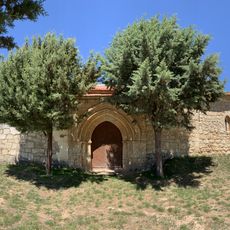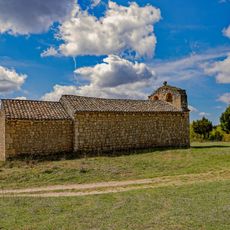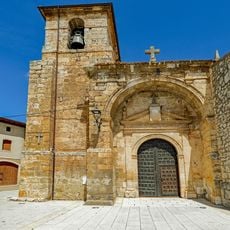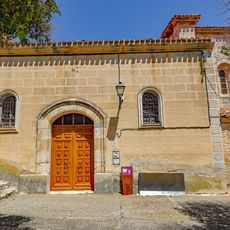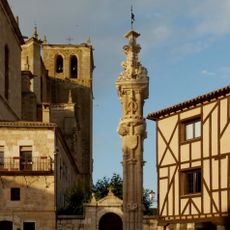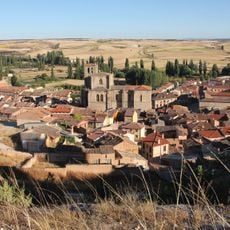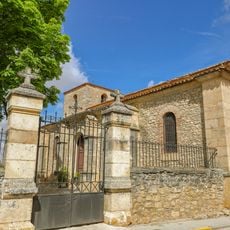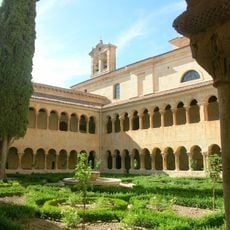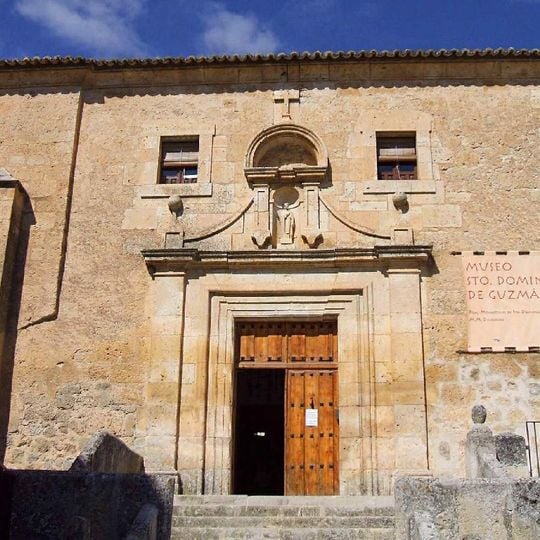
Monasterio de Santo Domingo, 13th century monastery in Caleruega, Spain.
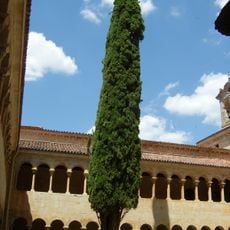
The Royal Monastery of Santo Domingo de Guzmán in Caleruega is mainly Romanesque from the 12th century, with later Gothic and Baroque additions. Its cloister has a Romanesque side and 13th-century wings, an 18th-century upper floor, and a deep well in the courtyard. The 16th-century church replaced the earlier Gothic one, of which only the nuns' choir remains.
King Alfonso X of Castile established this monastery in 1266 and granted the Caleruega estate to Dominican nuns as guardians of Saint Dominic's birthplace. This royal patronage allowed the community to grow and gradually add architectural features from different periods over the following centuries.
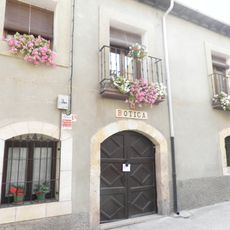
Each August the nuns care for the religious figures carried in procession, funded by money auctioned during the province's patronal festivals. Since 2009 Caleruega has re-enacted Alfonso X's granting of the privilegio rodado, with the whole village in period dress and a nun playing Prioress Doña Toda Martínez. The community also runs a small shop selling pastas.
The monastery is home to Dominican nuns who welcome visitors during prayer times and can share information about Saint Dominic and monastic traditions. It is best to check visiting hours beforehand and plan your visit around liturgical prayer schedules to experience the active monastic community.
The monastery keeps the Privilegio Rodado that Alfonso X granted the nuns on 10 July 1266, still in its archive. By that document the prioress also became Lady of Caleruega, so the community governed the town and named its officials each January, handing them staffs of office.
The community of curious travelers
AroundUs brings together thousands of curated places, local tips, and hidden gems, enriched daily by 93,464 contributors worldwide.