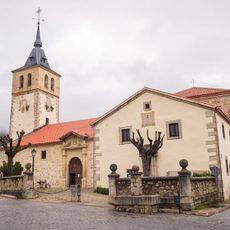
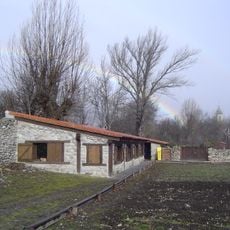
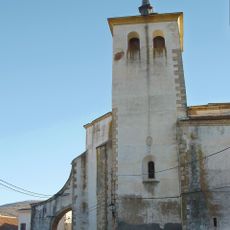
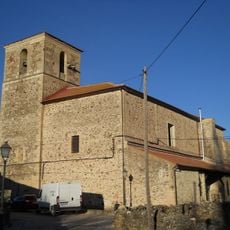
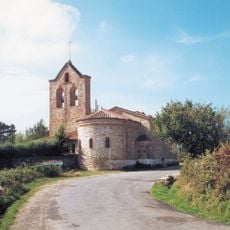
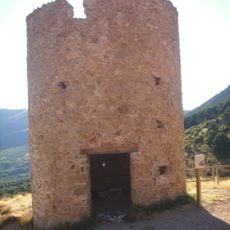
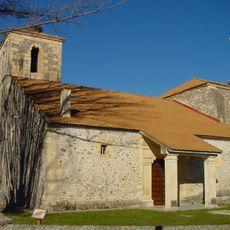
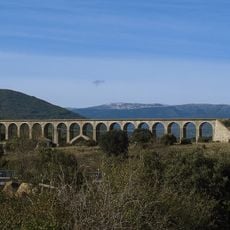
Archaeological site of Los Calveros, Paleontological site complex in Pinilla del Valle, Spain.
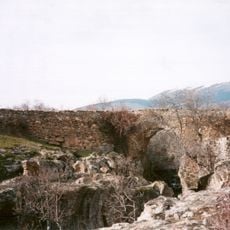
The Los Calveros sites are five main localities in a karst system in the Lozoya valley: Cueva del Camino, Abrigo de Navalmaíllo, Cueva de la Buena Pinta, Abrigo Ocelado and Cueva Des-Cubierta. Cueva del Camino is an exposed cavity with a collapsed roof, formed by dissolution of Upper Cretaceous limestones. Its northern sector preserves stratified deposits numbered 3 to 9, with level 5 holding the fossil bones.
The first fossils were found in 1979, and excavations led by Francisco Alférez of the Complutense University of Madrid ran until 1989. In 2002 fieldwork resumed under Juan Luis Arsuaga, Enrique Baquedano and Alfredo Pérez-González, revealing new sites and refining the dating. The sites were declared a Bien de Interés Cultural on 23 December 2004, and in September 2015 the Valle de los Neandertales archaeological park opened them to the public.
The name Calvero de la Higuera comes from the fig tree that stands at the site. Since September 2015 the sites form the Valle de los Neandertales archaeological park, with explanatory panels in situ and guided visits that opened the excavations to non-specialists. The five main sites are Cueva del Camino, Abrigo de Navalmaíllo, Cueva de la Buena Pinta, Abrigo Ocelado and Cueva Des-Cubierta.
The site offers guided tours during the summer excavation seasons, with free visiting days scheduled periodically for the public. Wear sturdy footwear and be prepared for uneven ground and narrow cave passages when exploring the area.
The Cueva del Camino, the first site found here, was a hyena den during the Eemian interglacial; its level 5 was thermoluminescence-dated to 90,961 ± 7,881 years ago. Excavations there yielded two human teeth, first attributed to pre-Neanderthals. The cave roof has collapsed, leaving the deposit open to the sky.
The community of curious travelers
AroundUs brings together thousands of curated places, local tips, and hidden gems, enriched daily by 93,465 contributors worldwide.