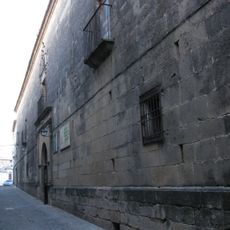
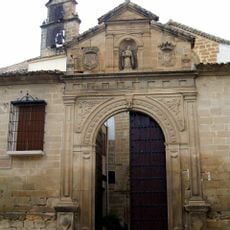
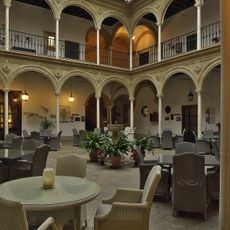
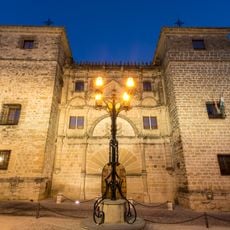
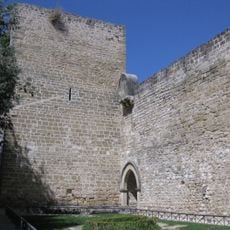
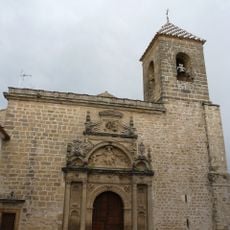
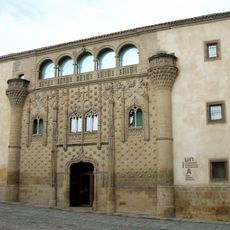
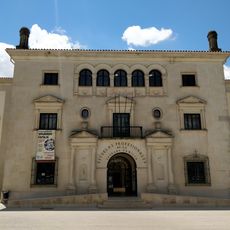
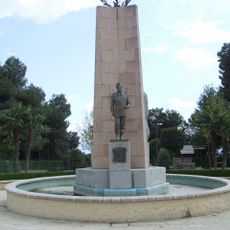
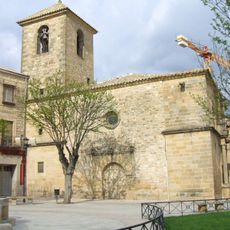
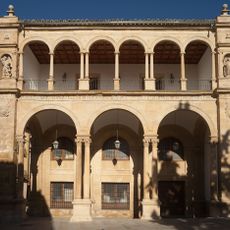
Bullring of Úbeda, Bullring in Úbeda, Spain.
The Bullring of Úbeda is a circular arena with stone walls and tiered seating that holds around 5,200 spectators. The building features the typical layout of a Spanish bullfighting venue, with corridors and functional areas designed for traditional events.
The bullring stands on the site of the San Nicasio convent, a 13th-century Franciscan foundation closed in 1836 under the Desamortización de Mendizábal. Neighbours asked the council for the convent orchard, and the ring opened on 1 August 1847 with bulls from Malta, Manuel Suárez and Curro Cúchares on the bill. Materials came from the demolished San Antonio convent.
The bullring is also called coso de san Nicasio, after the Franciscan convent that once stood on the site. Its opening on 1 August 1847 featured bulls from Malta, Manuel Suárez and the matadors Curro Cúchares and Julián Casas El Salamanquino. On 29 September 1865 Rafael Molina Lagartijo took his alternativa here from the bull Carabuco.
The bullring stands on the edge of Úbeda's historic centre, about 600 metres from the town centre, at roughly 755 metres above sea level. Access is through the calle de la Plaza de Toros side; the tiered stands are reached by stairs, so allow time for the climb. Events cluster around the season, so confirm the day's programme before travelling.
The site was a Franciscan convent of San Nicasio, founded in the 13th century after the conquest of Úbeda, where soldiers from the Battle of Las Navas de Tolosa were buried. Its main chapel later belonged to the Salamanca family, linked to Cardinal Cisneros. The nuns left during the French invasion and the convent closed in 1836 under the Desamortización de Mendizábal.
The community of curious travelers
AroundUs brings together thousands of curated places, local tips, and hidden gems, enriched daily by 94,794 contributors worldwide.