Palancares y Tierra Muerta, natural monument in Cuenca, Spain
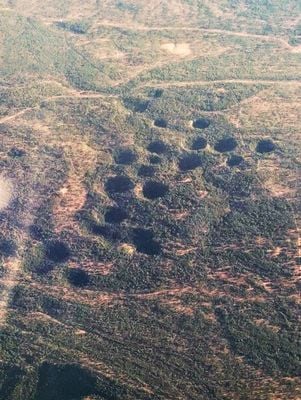
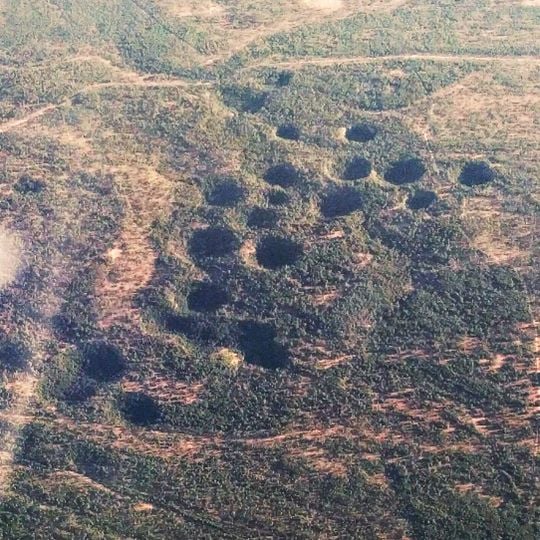
Palancares y Tierra Muerta is a natural monument in the Serranía de Cuenca, near the city of Cuenca. It comprises around 30 torcas—circular or oval dolines formed by underground carbonic water dissolving limestone along fractures—ranging from 0.3 hectares at Torca de la Novia to 10.25 hectares at Torca Larga, with depths exceeding 90 metres. The terrain is covered by black pine (Pinus nigra salzmannii), holm oak, Portuguese oak, savin juniper and prickly juniper.
The first written account of the torcas appeared in 1873, when Cortázar y Botella attributed them to collapses of Cretaceous limestone beds. The Monte de los Palancares has been a public utility forest since 1901 and belongs to the Cuenca city council, which has owned it since the 15th century. Since 2001 the area has formed part of the Monumento Natural de Palancares y Tierra Muerta within Castilla-La Mancha's protected areas network.
The depressions carry popular names such as Torca de la Novia, the smallest at 0.3 hectares, and Torca Larga, the largest at 10.25 hectares. The Monte de los Palancares has belonged to the Cuenca city council since the 15th century and is crossed by the Cañada real de la Cierva, a drovers' route.
Two marked walking paths make this location accessible, including a 7 kilometer circular route starting from Prado de los Esquiladores House. An information point at the trailhead provides guidance for visitors planning their walk.
The name Tierra Muerta, "dead land", refers to the surrounding plateau where scarce soil and water limit vegetation. The monument's 4,888-hectare Monte de los Palancares has belonged to the city of Cuenca since the 15th century and is crossed by the Cañada real de la Cierva, a drovers' route.
The community of curious travelers
AroundUs brings together thousands of curated places, local tips, and hidden gems, enriched daily by 95,700 contributors worldwide.