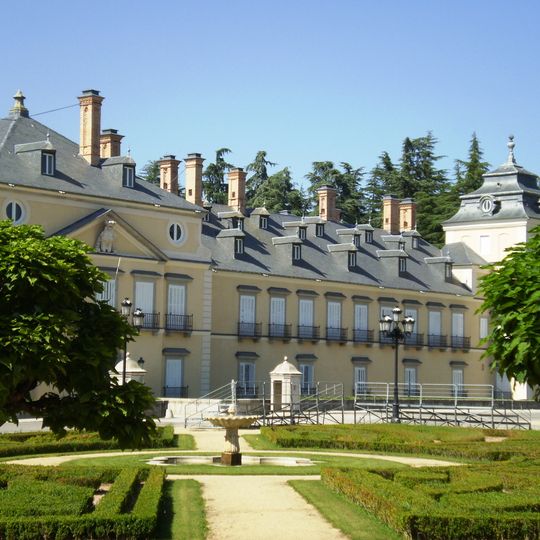
El Pardo Palace's Gardens, cultural property in Madrid, Spain
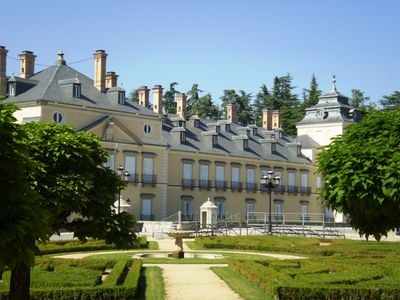
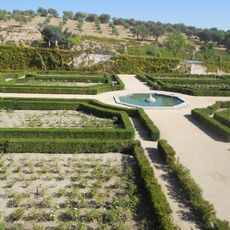
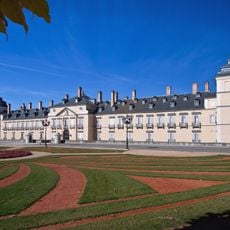
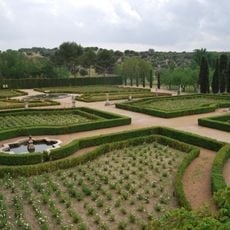
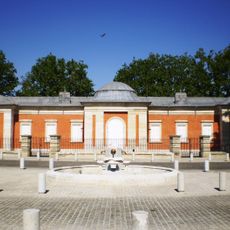
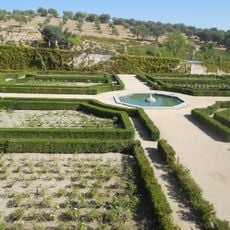
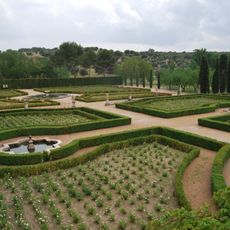
El Pardo Palace's Gardens is a formal garden space in northern Madrid, distinguished by straight pathways and carefully arranged tree groupings. The grounds feature maintained lawns, flower beds along the palace facade, an ancient moat area with towering pines and magnolias, historic fountains at the main entrance, and grassy spaces bordered by trimmed hedges that reflect the classical layout.
The gardens were established in the mid-1500s under King Philip II, likely designed by architect Juan Bautista de Toledo who introduced Italian design concepts. Throughout centuries, the space underwent significant transformations, particularly in the 1800s and 1900s when fruit trees were added and pathways were redesigned, gradually altering the original Renaissance character of the grounds.
The gardens reveal how Spanish royal families valued Italian design principles and adapted them to their own tastes, creating spaces for both relaxation and public display. Visitors today can observe this through the ordered pathways and tree arrangements that still reflect the careful planning that once impressed noble visitors.
The gardens are accessible from Madrid's city center and feature open spaces for walking with shaded areas beneath trees for rest. Visitors should note that some zones appear less maintained than others, and guided tours are recommended for thorough exploration to understand how these spaces were historically used.
The moat garden area once cultivated rare plants like jasmine that thrived under the moat's special water conditions, creating an unusual botanical feature. Though largely lost today, traces of this historical horticultural practice remain visible in the preserved moat structure and surviving vegetation.
The community of curious travelers
AroundUs brings together thousands of curated places, local tips, and hidden gems, enriched daily by 92,210 contributors worldwide.