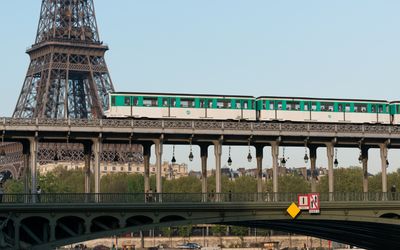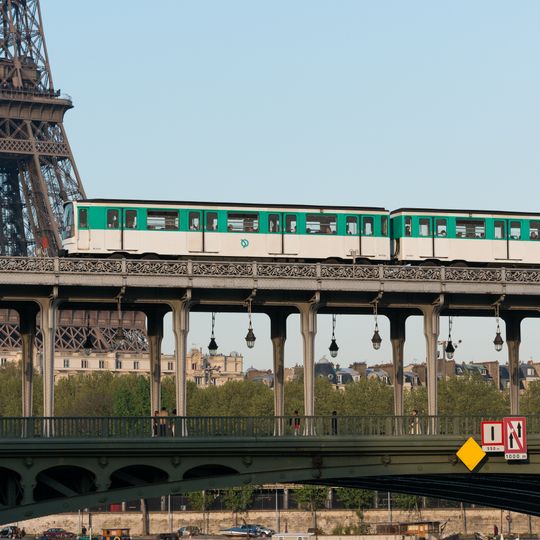
Paris Métro, Underground transport network in Paris, France
The underground network consists of tunnels and platforms linking neighborhoods, business districts and landmarks throughout the capital. Narrow corridors lead to platforms where trains run on parallel tracks in both directions, letting travelers switch between lines.
The first route opened at the turn of the century in response to growing traffic and became a model for many European systems. Later decades brought extensions into the suburbs and the integration of new technology for train control.
Station names honor writers, battles, artists and historical figures, turning each stop into a piece of French identity. Travelers encounter these labels daily, moving through an underground archive of national memory.
Travelers find entrances at street corners and major squares, often marked by characteristic signs or wrought-iron gateways. Tickets cover single journeys within certain zones, and machines are available at most stations.
Some trains run on rubber tires instead of steel wheels, reducing noise and easing acceleration on steep sections. This technology arose from experiments in the 1950s and appears in only a few networks worldwide.
The community of curious travelers
AroundUs brings together thousands of curated places, local tips, and hidden gems, enriched daily by 60,000 contributors worldwide.