MoEDAL experiment, Particle physics experiment at CERN, France
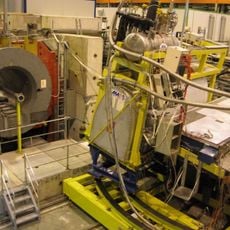
The MoEDAL experiment is a particle detector system at CERN in France, installed at a fixed point on the Large Hadron Collider to search for rare particles that other detectors are not designed to find. It uses layers of plastic material that record traces left by passing particles, combined with trapping volumes filled with aluminium bars meant to catch and hold certain theoretical particles.
MoEDAL was approved in 2010 as the seventh experiment at the Large Hadron Collider and started taking data not long after. Over the following years it added new components, including a timing detector array that broadened the range of particles it could search for.
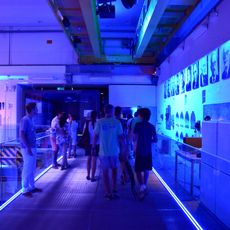
The name MoEDAL stands for Monopole and Exotics Detector at the LHC, a reference to the magnetic monopole, a particle predicted by theory but never observed. Visitors who join a CERN tour often find this kind of naming detail a good entry point to understanding what the search is really about.
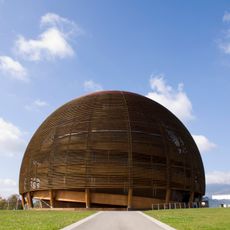
The experiment sits deep underground along the accelerator ring and is not open for direct public visits. CERN visitor centres on the surface offer guided tours and exhibitions that give a good sense of how this kind of experiment works.
The plastic detector sheets used in the experiment are physically collected from the tunnel after each data-taking period and then examined under a microscope in a laboratory. This makes MoEDAL one of the few detectors at CERN that does not rely on real-time electronic readout to record its results.
The community of curious travelers
AroundUs brings together thousands of curated places, local tips, and hidden gems, enriched daily by 60,000 contributors worldwide.