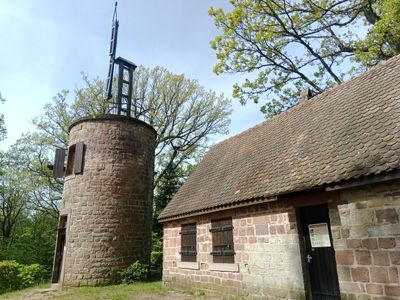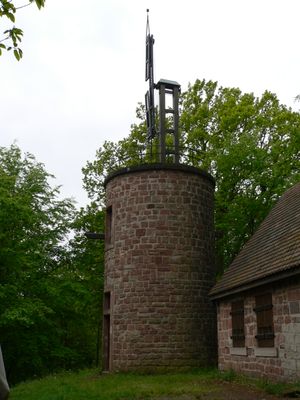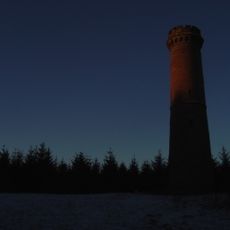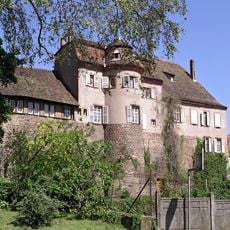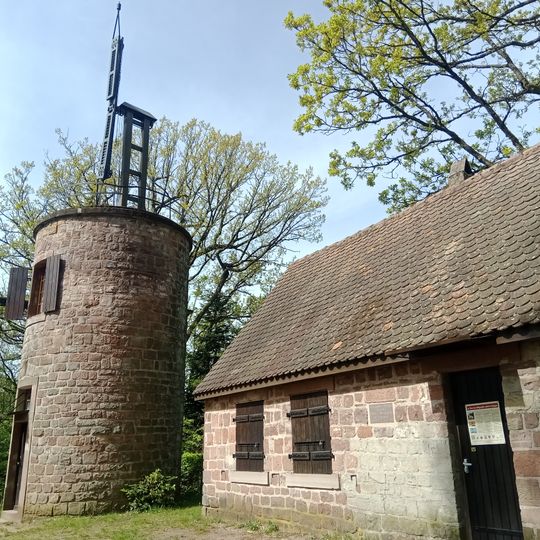
Saverne semaphore tower, Semaphore tower in Haegen, France.
The Saverne semaphore tower is a signal station built in the late 1700s, positioned at 434 meters (1,425 feet) elevation with movable mechanical arms. These arms could shift into different positions to transmit information across long distances using a pre-established code.
This tower was built in the late 1700s as part of Claude Chappe's optical telegraph network, which allowed rapid connections between distant cities. The system remained operational until 1852, linking Paris and Strasbourg through a series of similar stations.
The tower was once a vital hub where messages traveled faster than any other method available at the time. Today, visitors can observe how this location connected distant places through an innovative system that changed communication.
The site is open year-round for visitors to examine the restored signal equipment and learn about early long-distance communication. The elevated location offers views of the surrounding landscape, which was essential for operators to see neighboring stations and relay messages.
The restored mechanism reveals that operators could create nearly 200 different symbols using the wooden arms to send encoded messages. This system transmitted information faster than mounted couriers, even across vast distances separating Paris and Strasbourg.
The community of curious travelers
AroundUs brings together thousands of curated places, local tips, and hidden gems, enriched daily by 91,994 contributors worldwide.