Église Sainte-Bernadette du Banlay

Log in to your account

AroundUs is a community-driven map of interesting places, built by curious explorers like you. It grows with every review, story, and photo you share.
Connect to save your favorite spots, contribute locations, and create personalized routes.
By continuing, you accept our Terms and Conditions and our Privacy Policy

Église Sainte-Bernadette du Banlay

Add to collection
Map
Suggest a change
Share

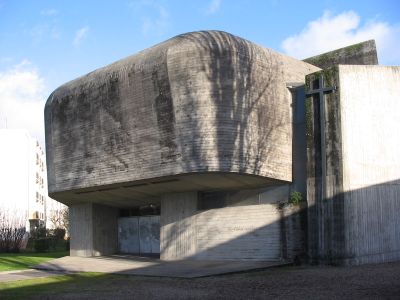
Église Sainte-Bernadette du Banlay, Brutalist church in Nevers, France

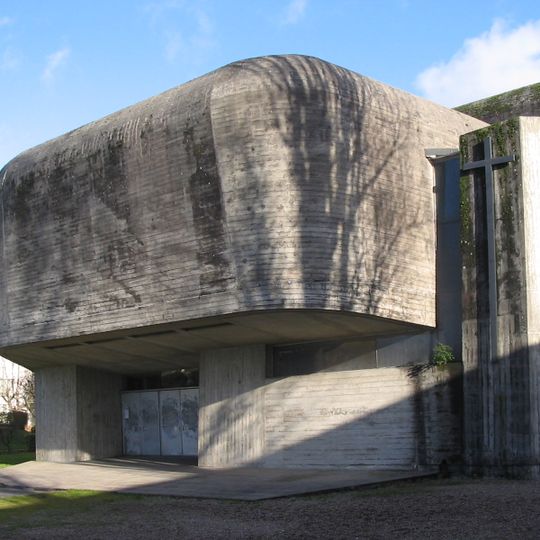
Église Sainte-Bernadette du Banlay is a church in Nevers made entirely of concrete and built during 1964-1965. Two large oblique concrete planes form the interior space and create an unusual spatial effect through their slant and the overhead lighting windows.

The building was designed by architects Claude Parent and Paul Virilio following a competition initiated by Bishop Vial and Abbé Bourgoin. It later received recognition as a Monument Historique in 2000 and earned the Patrimoine du XXe siècle label in 2005.

The building is named after Saint Bernadette of Lourdes and has become a distinctive landmark in the Banlay neighborhood. Visitors immediately notice how its slanted concrete forms and vast windows differ from traditional church architecture.

Visitors should note that the interior is very bright due to the slanted walls and direct overhead light, which can feel intense on sunny days. The architectural details are best explored by taking time to view the space from different angles and positions.

The church was designed by Paul Virilio, an influential theorist who later became internationally renowned, while this was still early in his career. This project was one of his few built works and remains an example of his theoretical ideas expressed through architecture.

Location: Nevers

Architects: Claude Parent, Paul Virilio

Architectural style: brutalist architecture

Address: 23 rue du Claude Parent - Banlay

GPS coordinates: 47.00290,3.15706

Latest update: December 6, 2025 17:41

Photos
Modern concrete churches of the world

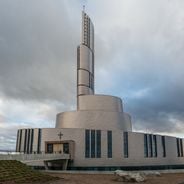
Concrete churches from different countries show the architectural evolution of the 20th century. These buildings combine geometric forms with modernist designs and use light as a design element. The structures demonstrate the technical capabilities of concrete as a construction material for religious spaces. From Brazil to Japan, from Scandinavia to Spain, churches emerged that broke from tradition. Architects like Le Corbusier and Oscar Niemeyer created spaces where clean lines and concrete masses guide the eye. Some churches feel almost monumental with their daring shapes, while others surprise through their simplicity. The buildings vary greatly from one another, reflecting different cultures and design philosophies. Visitors to these places experience how modern building and spiritual space come together. The churches in Reykjavik and Berlin, in Rome and Mechernich offer different answers to how faith takes form in concrete. Light falls through windows and openings onto rough or smooth surfaces, creating new impressions as the day changes.

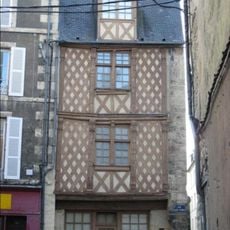
Historical and religious monuments of Nevers: Ducal Palace, cathedral, churches, museums and medieval fortifications

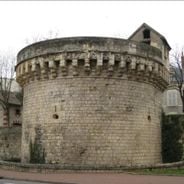
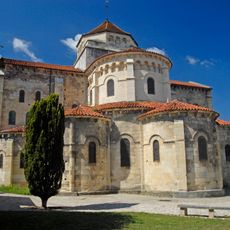
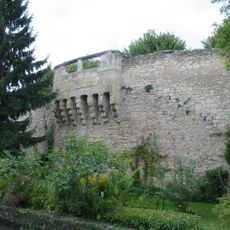
Nevers tells its story through its buildings. The town was once home to dukes, and you can still feel this importance walking through its streets. The buildings you see date from the 11th to the 20th century and follow one after another like pages of an open book. The Ducal Palace stands in a gothic style, showing the power of the past. The cathedral combines Romanesque and gothic styles, with its two facing choir areas, a rare arrangement that catches the eye of visitors. Churches line the city, some dating back to the Middle Ages. Porcelain made Nevers famous for many years, and museums display these works proudly. Old city walls and towers still stand in places, made of stone and reminding us of old defenses. The Porte du Croux is a large 14th-century building that rises 25 meters high with its battlements. The Goguin Tower, also from the 14th century, sits near the Loire River. Green gardens offer spots to relax between visits, like Parc Roger-Salengro with its shaded paths in the heart of the city. Walking through Nevers, you see how each period built on what came before. This mix of eras shapes the look of the town today, where the duke’s past, medieval history, and ceramic art exist side by side naturally.

Reviews

Visited this place? Tap the stars to rate it and share your experience / photos with the community! Try now! You can cancel it anytime.

« Église Sainte-Bernadette du Banlay - Brutalist church in Nevers, France » is provided by Around Us (aroundus.com). Images and texts are derived from Wikimedia project under a Creative Commons license. You are allowed to copy, distribute, and modify copies of this page, under the conditions set by the license, as long as this note is clearly visible.

Discover hidden gems everywhere you go!

From secret cafés to breathtaking viewpoints, skip the crowded tourist spots and find places that match your style. Our app makes it easy with voice search, smart filtering, route optimization, and insider tips from travelers worldwide. Download now for the complete mobile experience.
Around Us App Screenshot

A unique approach to discovering new places

Le Figaro

All the places worth exploring

France Info

A tailor-made excursion in just a few clicks

20 Minutes