Hildesheim Treasure, Silver artifact collection in Hildesheim, Germany.
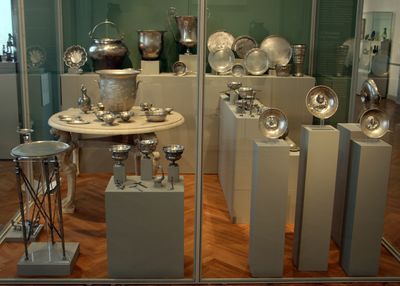
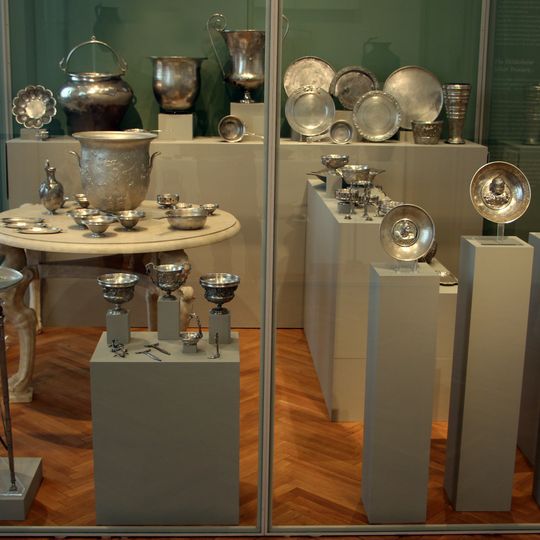
The Hildesheim Treasure contains roughly seventy solid silver vessels from Roman times, including plates, goblets, trays, and a three-legged table. The collection features pieces from the 1st century AD with various forms and decorations that reveal the luxury enjoyed by the Roman elite.
Prussian soldiers discovered the silver collection on October 17, 1868, while preparing ground for a shooting range on Galgenberg Hill. The find dates to the 1st century AD and was likely buried by wealthy Romans.
The silver items display Roman metalworking techniques through detailed reliefs, particularly the Minerva Bowl showing the goddess seated on a throne. These depictions reveal the artistic tastes of wealthy people from that era.
The collection resides in the Antikensammlung Berlin at the Altes Museum, where visitors can examine the silver pieces closely. It helps to spend time looking at the fine details of the decorations to appreciate the artistic value of these objects.
This is the largest Roman silver treasure ever discovered beyond the boundaries of the Roman Empire. The find demonstrates how far Roman trade and contact extended into Germanic regions.
The community of curious travelers
AroundUs brings together thousands of curated places, local tips, and hidden gems, enriched daily by 91,674 contributors worldwide.