Neue Staatsgalerie, Modern art museum in Stuttgart, Germany
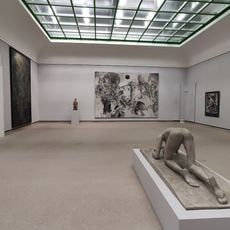
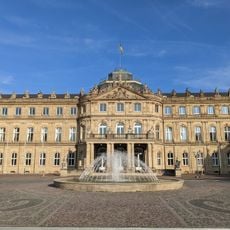
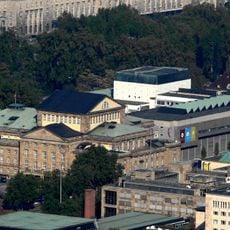
The Neue Staatsgalerie is a museum building in Stuttgart designed by James Stirling and Michael Wilford, built 1979–1984 next to the Alte Staatsgalerie. Its facades combine travertine and sandstone with green steel framing and pink and blue handrails. A central open-top rotunda, ringed by a public footpath and ramp, contains the sculpture garden.
British architect James Stirling designed this extension to the original Staatsgalerie, and construction of the new building was completed in 1984. This addition responded to growing interest in contemporary art and marked an important shift in the city's museum landscape.
The building's design quotes earlier architecture: the plan echoes Schinkel's Altes Museum in Berlin, the open rotunda recalls the Pantheon, and the mushroom-shaped columns refer to Frank Lloyd Wright's Johnson Wax headquarters. Two ventilation pipes on the east side, in size, shape and colour, cite the Centre Pompidou.
The building sits about three metres above street level on a first terrace, reached from the west street by a ramp and stairs; a four-pillar kiosk marks the entry. From that terrace a second ramp climbs through the central rotunda and continues down through the library to the east street. The terraces and this route are open to the public without a museum ticket.
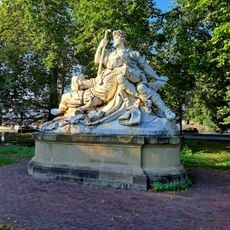
The open rotunda is crossed by two axes: the public footpath along its north edge and a ground-level route running north to south, entered on the north through a large trilithon of two thick classical columns and on the south by steps. Arches, sculptures and climbing plants stand inside it.
The community of curious travelers
AroundUs brings together thousands of curated places, local tips, and hidden gems, enriched daily by 93,443 contributors worldwide.