Bonn Botanical Garden, University botanical garden in Poppelsdorf, Germany
Bonn Botanical Garden is a university garden located in the Poppelsdorf district, with a large collection of plant species from around the world. Several glasshouses on the grounds are each dedicated to specific plant groups such as ferns, palms, succulents, orchids, and Mediterranean plants.
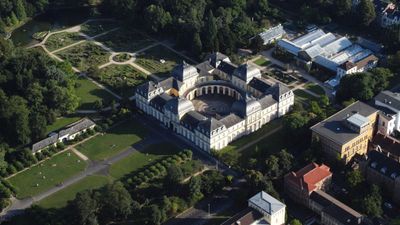
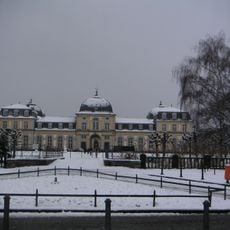
A castle estate of the Archbishops of Cologne is documented here from about 1340, and around 1650 a Renaissance garden with orangeries was laid out. Around 1720 the grounds were remade as a Baroque garden, whose basic structure survives; the rococo Poppelsdorf Palace was completed in 1746 under Clemens August. In 1818 palace and park passed to the new University of Bonn, and its first director Nees von Esenbeck turned the park into a botanical garden. Destroyed in World War II, it was rebuilt by 1979–1984.
The garden's name recalls the Poppelsdorf pleasure garden of the Cologne electors, and since 2004 it has been a station on the Strasse der Gartenkunst between Rhine and Maas. Its scientific collections include the largest German collection of carnivorous plants and a conservation collection for Sophora toromiro from Easter Island. Since 1996 research here has fed into the International Plant Exchange Network (IPEN).
The garden is within walking distance of Poppelsdorf Palace and is easy to reach on foot or by bicycle. On cooler days, it makes sense to start with the glasshouses, which stay open year-round regardless of the weather outside.
The Victoria House displays the giant water lily Victoria regia, as the sources name it, alongside Nymphaea, Aristolochia and Passiflora and tropical bog plants. The same house holds a specimen of Amorphophallus titanum, the titan arum. The garden's carnivorous plant collection is described as the largest in Germany.
The community of curious travelers
AroundUs brings together thousands of curated places, local tips, and hidden gems, enriched daily by 94,561 contributors worldwide.