Falkenstein Castle, Medieval castle ruin in Bad Emstal, Germany
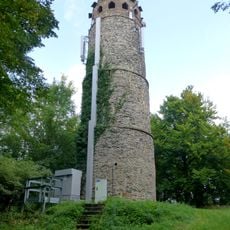
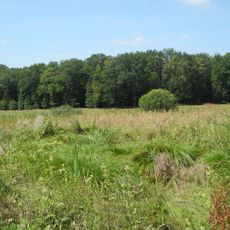
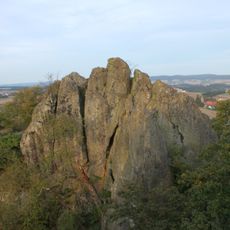
Falkenstein Castle is a castle ruin located in Bad Emstal in the Hesse region, standing on elevated terrain that overlooks the surrounding valleys. The site contains stone walls, a tower core, and other defensive structures that show how medieval fortifications were built to command the landscape.
Built probably at the end of the 13th century, Falkenstein was first documented in 1346, when Landgrave Henry II of Hesse pledged it to the Lords Hund von Kirchberg and Holzhausen for 452 marks of silver, requiring at least 170 marks for rebuilding. In 1631 Tilly's troops destroyed the castle, and after 1679 it fell back to the Hessian landgraves as a lapsed fief.
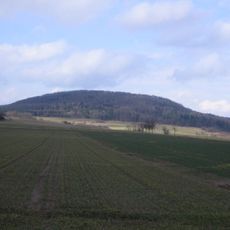
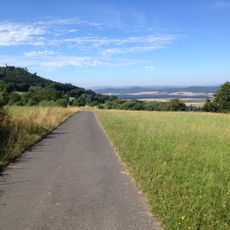
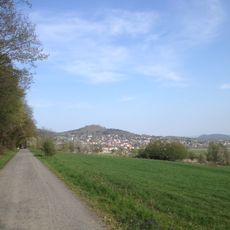
The name Falkenstein, "falcon rock", refers to the basalt knoll the ruin occupies. A chapel on the castle is documented again as early as 1351, and on 13 September 1363 the many members of the Hund family concluded a Burgfrieden, a castle peace agreement, here. The site is reached today on hiking trails through the wooded Habichtswald nature park.
The site is located on a hilltop and requires a walk uphill to reach it. Wear sturdy shoes since the ground is uneven and some paths are steep or narrow.
The sources record no cistern or water system at Falkenstein. What survives is the shape of the site: a round plateau only 30 m across, with a 40 m-wide outer bailey to the south, an 11 m stretch of wall and two tall narrow wall pieces framing a window. West of the ruins, traces of the ditch and rampart are still visible.
The community of curious travelers
AroundUs brings together thousands of curated places, local tips, and hidden gems, enriched daily by 94,248 contributors worldwide.