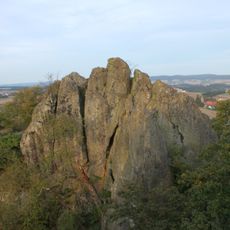
Burgberg, Summit in Hesse, Germany
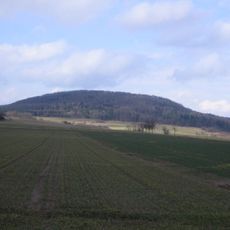
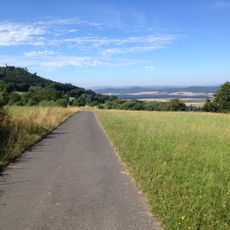
Burgberg is a 439.6 m basalt knoll in the Langenberge hills, part of the Habichtswälder Bergland, rising directly west of Großenritte in the municipality of Baunatal, Hesse. The almost entirely wooded hill has a water-treading pool north of its summit and a large basalt quarry on its southeast slope.
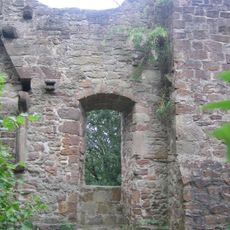
The hilltop holds a ring wall with an inner area of about 2.5 hectares, settled twice: around 6000 years ago and again during the Hallstatt culture between 800 and 400 BC. On the east slope, Prince Heinrich von Hanau had a hunting lodge built shortly before the end of the Electorate of Hesse; only the shell was finished when Prussia annexed Kurhessen in 1866. The building stood unused for ten years until 1877, when the Renitente Kirche acquired it for a deaconess house for the old and sick, named Gertrudenstift after its founding benefactor Gertrude von Hanau. The dilapidated Schlösschen was demolished in 1972.
The name Burgberg refers to the Großenritte ring wall on the upper slope, a 2.5-hectare enclosure settled about 6,000 years ago and again during the Hallstatt culture between 800 and 400 BC. On the east slope stood Prince Heinrich von Hanau's hunting lodge, later the Gertrudenstift deaconess house, demolished in 1972.
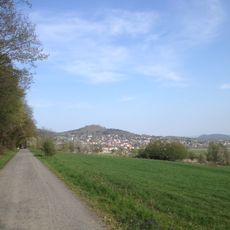
The hill rises directly west of Großenritte, a western district of Baunatal, and is almost entirely wooded. A water-treading pool lies north of the summit, and a large basalt quarry extends along the southeast slope. The ring wall on the upper part of the hill encloses about 2.5 hectares.
The hilltop holds the Wallburg Großenritte, a ring rampart enclosing about 2.5 hectares. It was settled twice: around 6000 years ago and again in the Hallstatt period, between 800 and 400 BC. On one side steep rock walls made extra fortification unnecessary.
The community of curious travelers
AroundUs brings together thousands of curated places, local tips, and hidden gems, enriched daily by 94,289 contributors worldwide.