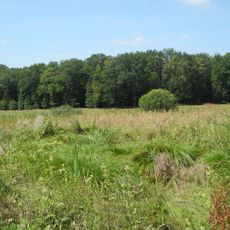
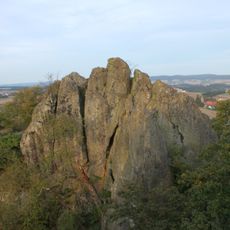
Altenburg, prehistoric hillfort site in Niedenstein, Germany
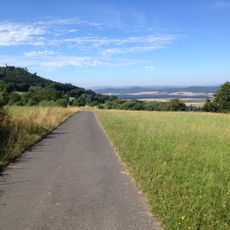
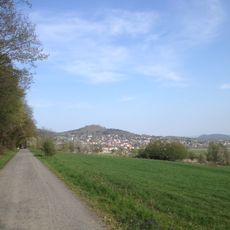
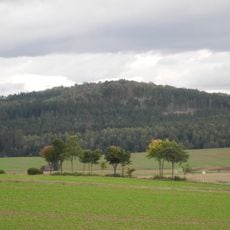
Altenburg is a prehistoric hillfort on the 450.7 m basalt plateau of the Altenburg hill between Niedenstein and Bad Emstal-Sand. Its roughly rectangular summit, about 500 m long and 300 m wide, is edged by remains of stone ramparts on the northwest and northeast flanks; the south side was protected by natural cliffs.
The Altenburg was settled in the Neolithic period by the Michelsberg culture between 4200 and 3500 BC, and again in the Iron Age between the 3rd and the last decades of the 1st century BC. Excavations between 1905 and 1913 uncovered ramparts, gates, and clay pits; the walls were originally reinforced with timber. The site was abandoned for reasons that remain unclear, with speculation that passing Suebi may have plundered it.
The name Altenburg, also Grüne Platte, is used locally for the basalt plateau. Finds from the site, including Bronze belt hooks, needles, horse harness fittings and an oak door leaf, are kept in the Hessian State Museum in Kassel and described in the Altenburg and Town Museum in Niedenstein, which holds a model of the settlement.
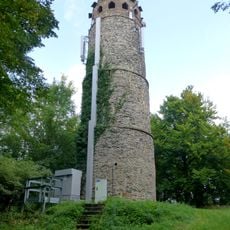
You can reach the ruins by following marked hiking trails that start from Niedenstein and lead up the hill. Information boards at the site explain the layout and help you understand what you are seeing.
The hilltop's round hollows turned out to be timber-lined pits and cisterns, and one pit served as the settling basin of a pottery workshop. Excavations in 1905–1913 also found an oak door leaf and a horse harness fitting, now kept in Kassel's state museum.
The community of curious travelers
AroundUs brings together thousands of curated places, local tips, and hidden gems, enriched daily by 94,634 contributors worldwide.