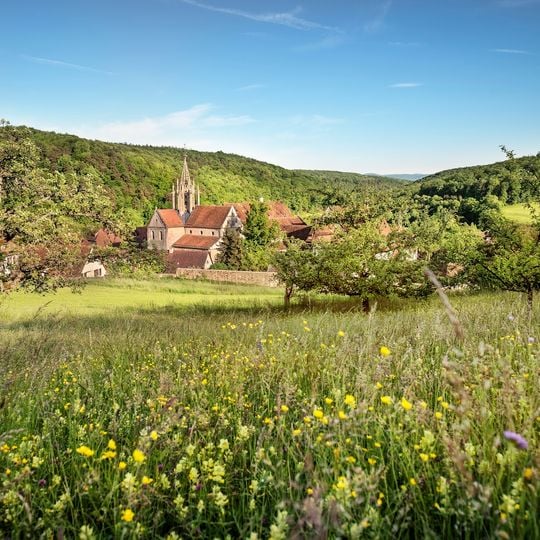
Bebenhausen Abbey, Cistercian monastery in Tübingen, Germany
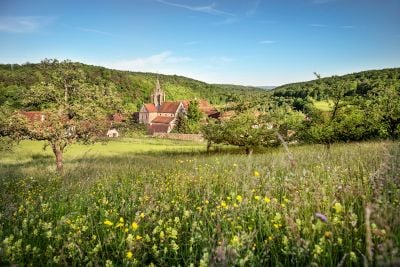
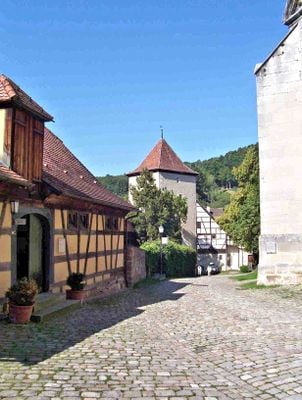
Bebenhausen Abbey is a monastery complex in Tübingen featuring Gothic buildings including a church, refectories, abbot's residence, guesthouse, and infirmary, all enclosed by fortified walls. The layout displays typical Cistercian design with functional spaces arranged for communal monastic life.
Rudolf I, Count Palatine of Tübingen, donated Bebenhausen to the Premonstratensians around 1185; they left later in the decade, and in 1190 the Cistercian General Chapter at Cîteaux accepted the house, sending monks from Schönau Abbey. The monastery church was consecrated in 1228. In 1534 Duke Ulrich of Württemberg dissolved the abbey, and in 1807 King Frederick I turned the abbot's house into a hunting retreat.
The abbey's name comes from the village of Bebenhausen, whose root "Bebo-" refers to a man of that name, said in legend to have been a duke, monk or hermit. The monastery church now serves as a Protestant parish church, and the former abbey grounds housed a boarding school and Protestant seminary from 1560 to 1806.
The complex lies on a plateau above two streams north of Tübingen, with the church, cloister and palace grouped together. The grounds are entered through gateways in the fortified wall, and the main buildings are linked by level courtyards. The palace itself is not open to the public.
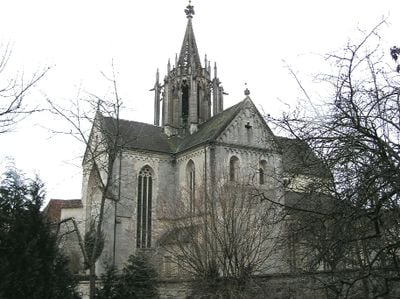
Peter von Gomaringen, abbot around 1500, broke Cistercian rules by adding a stone ridge turret over the church crossing, and built another atop the summer refectory. The crossing turret is the slender openwork spire visible above the roofs today.
The community of curious travelers
AroundUs brings together thousands of curated places, local tips, and hidden gems, enriched daily by 94,043 contributors worldwide.