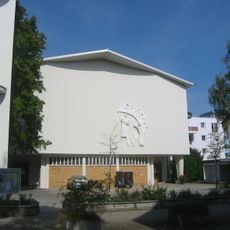
Archäologisches Landesmuseum Baden-Württemberg, Archaeological museum in Constance, Germany.
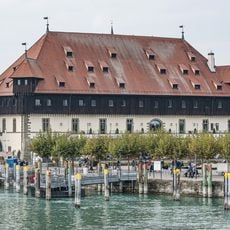
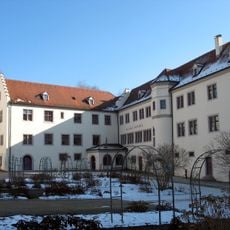
The Archäologisches Landesmuseum Baden-Württemberg occupies the convent building of the former Benedictine abbey of Petershausen in Constance. Its permanent exhibition spreads over three floors and covers the state's history from the Palaeolithic to the early modern period. Highlights include the original Menhir of Weilheim, the Trossingen lyre (c. 580 AD), and the oldest surviving boat from Lake Constance, dated to 1340.
The museum was established in 1990 and opened officially in 1992 to preserve archaeological finds from one of Europe's most important discovery regions. Its collections document the development of human societies in Baden-Württemberg across several thousand years.
The collections reflect how people in this region lived across different periods, from simple settlements to complex societies. Visitors can observe the evolution of daily practices, craftsmanship, and burial customs through the artifacts on display.
The permanent collection occupies three floors of the former Petershausen monastery, with the ground floor covering excavation methods and shipping finds, the first floor pile dwellings and Roman Ladenburg, and the second floor medieval town life and the Konstanz city archaeology section. The building is a state property in Konstanz; the central finds archive is in Rastatt. The Trossingen lyre and the 1340 Bodensee cargo ship are highlights not to miss.
The museum houses a sixth-century lyre from the Trossingen grave, one of the most complete early medieval musical instruments ever found in Europe. This rare object offers insight into the musical culture and artistic skills of early medieval societies.
The community of curious travelers
AroundUs brings together thousands of curated places, local tips, and hidden gems, enriched daily by 94,025 contributors worldwide.