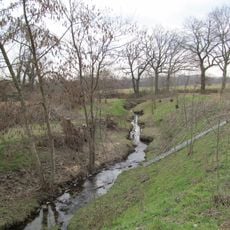
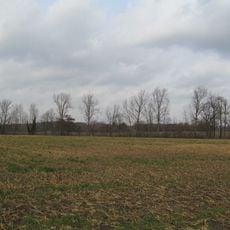
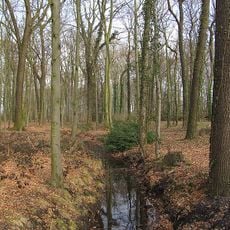
Oberaden, Roman military fortress in Bergkamen, Germany
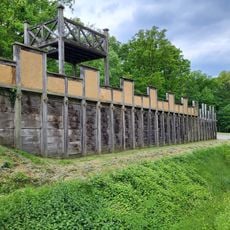
Oberaden is a Roman military camp of about 56 hectares near Bergkamen, founded in 11 BCE during Drusus's campaigns. Its irregular seven-sided perimeter, about 840 by 680 metres, was defended by a 2.7 km ditch and a 3 m wooden-earth wall with towers every 25–30 m. Inside, a 42 m wide Via principalis crossed the camp; the Praetorium had a 10 by 28 m atrium and a central courtyard of about 472 m².
Founded in 11 BCE during Drusus's campaigns, the camp served as a base for operations against the Sugambri, Brukteri, Usipetes and Tencteri. After Drusus died in 9 BCE, his brother Tiberius continued the offensive and completed the submission of these tribes. The camp was abandoned around 9–8 BCE in favour of Haltern, though it may have been reused in Germanicus's campaigns of 14–16 CE.
The finds here reveal that Roman soldiers ate imported Mediterranean foods like figs and olives brought from distant lands. These discoveries show how Romans maintained their familiar way of living even at this remote outpost far from home.
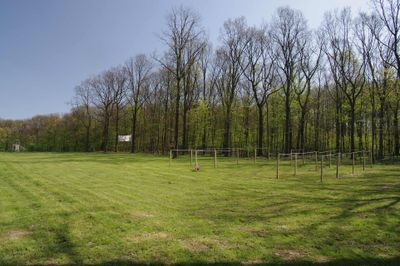
The excavated sections of the camp are accessible for exploration where visitors can see stone remains and earthen ramparts. Wearing comfortable shoes is recommended since the ground is uneven and walking distances are considerable to view different parts of the site.
Scientists were able to determine the exact construction time of the fortress to autumn 11 BCE using analysis of tree rings from wooden remains. This precise dating makes this site invaluable for understanding the timeline of Roman history in the region.
The community of curious travelers
AroundUs brings together thousands of curated places, local tips, and hidden gems, enriched daily by 93,856 contributors worldwide.