Salem Abbey, Cistercian monastery in Salem, Baden-Württemberg
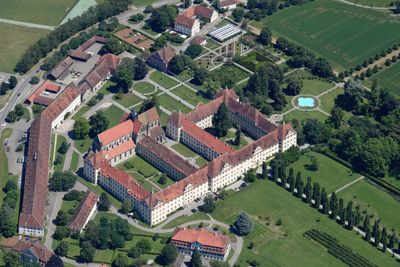
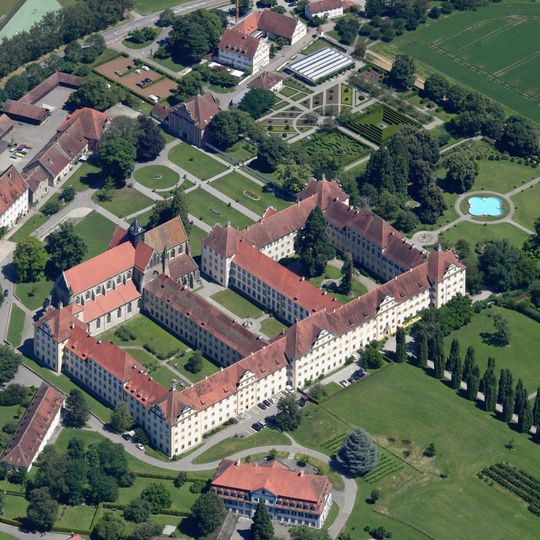
Salem Abbey is a former Cistercian monastery in Baden-Württemberg, centred on the High Gothic Salem Minster, built from 1299 and consecrated in 1414. Around it stand Baroque convent buildings erected from 1697 to 1706 by Franz Beer, forming an irregular quadrangle with pale plastered walls, steep red-brown tiled roofs and small dormer windows. The north side holds the church-like section with tall arched windows.
Guntram von Adelsreute donated the Salmannsweiler estate to the Cistercians in 1134, and twelve monks from Lucelle Abbey arrived in 1137. Abbot Frowin named the monastery Salem, and in 1155 Frederick I granted it imperial immediacy. A fire destroyed all buildings except the church in 1697, and secularization transferred the abbey to Baden in 1802.
The monastic name Salem refers to the biblical place of peace, the seat of King Melchisedek, understood in the Middle Ages as an older name for Jerusalem. Until the 18th century Salem and Salmannsweiler were used side by side; secularization in 1804 made the spiritual name the name of the community. The cloister ceilings rebuilt after 1697 carry stucco and frescoes of the life of Bernard of Clairvaux.
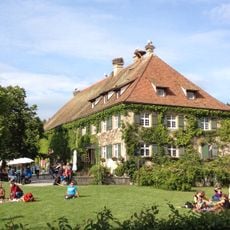
The complex is entered through the former service range on the north side, which held the stable, mill, bakery, blacksmithy, prison, wine cellar and tithe barn. A wall has enclosed the grounds since around 1300, so the courtyard layout still guides a visit. The cloister ceilings carry stucco and frescoes of the life of Bernard of Clairvaux.
In the 18th century the abbey opened the first savings bank in Germany and introduced modern financial practices. The monks managed estates and villages, which made this early banking foundation appear as a practical solution for their economic tasks.
The community of curious travelers
AroundUs brings together thousands of curated places, local tips, and hidden gems, enriched daily by 93,246 contributors worldwide.