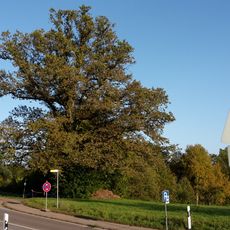
Barbarossa-Linde, Historical linden tree in Lorch, Germany
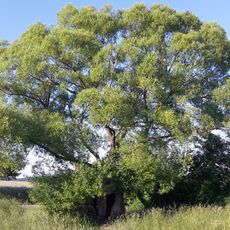
The Barbarossa-Linde was a winter linden near Kloster Lorch in Lorch, Baden-Württemberg. Its hollow trunk, lined with masonry inside, measured about eight metres around, and the tree stood roughly 20 metres tall. Two main branches remained at the end, supported by heavy beams.
The linden stood near Lorch Abbey and was named after Frederick I Barbarossa, Duke of Swabia and Holy Roman Emperor from 1155 to 1190. A storm on 1 November 1755 tore off one main branch, and about a century later two more were lost. The hollow trunk, about eight metres around, was walled up inside; the tree was finally felled in the night of 16–17 January 1955.
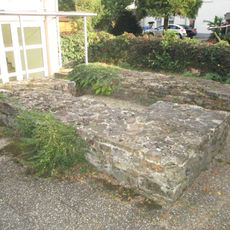
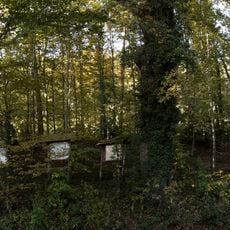
The tree was called the "last living witness of the Staufer era". In 1867, during a stay in Lorch, the poet Eduard Mörike wrote about the then hollow-trunked linden in his work. A plaque now marks the site where it stood.
The former site is located in the town of Lorch and is easily accessible to visitors interested in exploring the region's heritage. Today, information plaques and memorials at the location help tell the story of its historical importance.
The tree was hollow inside and its trunk was lined with masonry; it measured about eight metres around and stood some 20 metres tall. Two remaining main branches were held up by heavy beams. Eduard Mörike wrote about the tree during his stay in Lorch in 1867.
The community of curious travelers
AroundUs brings together thousands of curated places, local tips, and hidden gems, enriched daily by 94,375 contributors worldwide.