Kloster Lorch, Benedictine monastery in Lorch, Baden-Württemberg, Germany
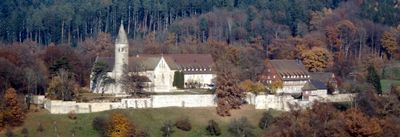
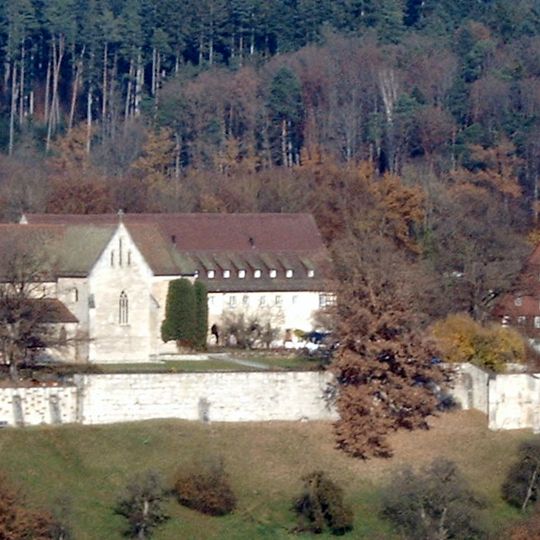
Kloster Lorch is a former Benedictine abbey in Lorch, Baden-Württemberg. The long building has pale walls and a steep red-brown roof; at its left end a taller gabled section with a pointed roof, small windows and a narrow arched window projects forward, while a lower wing with dormer windows runs to the right. The complex stands above a long low wall of light stone blocks, with a tall dark evergreen shrub and bare trees near the facade.
Duke Frederick I of Swabia and his family founded the Benedictine abbey around 1102; its founding charter is a later 12th-century forgery. From 1140 to 1208 it served as a Staufer burial site, and the transfer of the deceased from the collegiate church to the new abbey church took place in 1139. Around 1200 the abbey church received decorative pillars and a tower over the crossing.
Lorch was the house monastery of the Staufer, and from 1140 to 1208 the abbey church served as one of their burial places. In 1462 Count Ulrich V pushed the community to join the Melk Reform, after which the noble abbot Nikolaus Schenk von Arberg was replaced by the bourgeois Jodokus Winkelhofer. The abbey's income came largely from vineyards on the Enz and the middle Neckar.
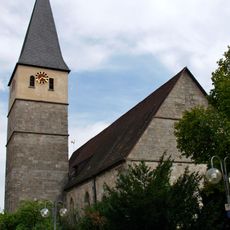
The former abbey lies in the Rems valley; the monastery church and surviving convent buildings stand above a long stone retaining wall. Approach on foot from the town of Lorch, as the site is on rising ground. The church interior and cloister are the main areas to see.
The abbey church served as a Staufer burial site from 1140 to 1208; the transfer of the deceased from the collegiate church could only be arranged in 1139, with King Conrad III's support. Around 1200 the church received decorative pilasters and a tower over the crossing, giving the burial place visible weight.
The community of curious travelers
AroundUs brings together thousands of curated places, local tips, and hidden gems, enriched daily by 94,368 contributors worldwide.