Kaiser Wilhelm Institute of Anthropology, Human Heredity, and Eugenics, Research institute in Dahlem, Berlin, Germany
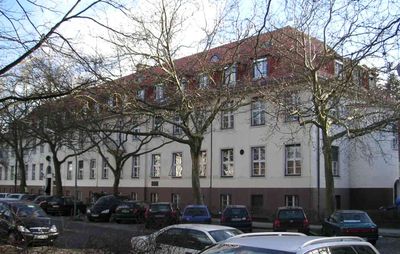
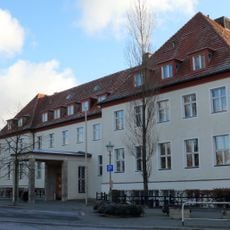
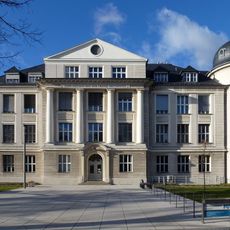
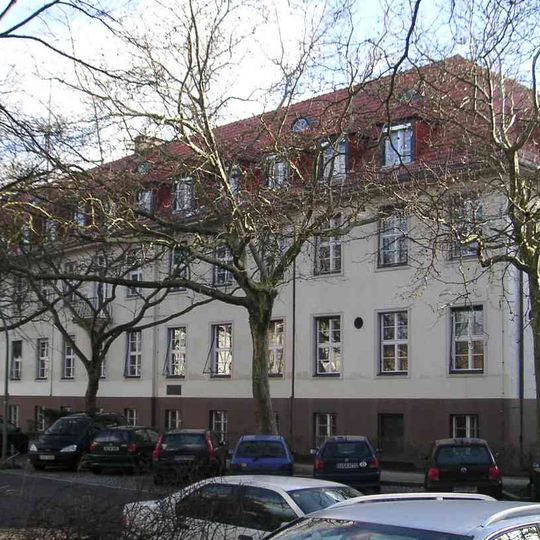
The Kaiser Wilhelm Institute of Anthropology, Human Heredity, and Eugenics was a research center in Berlin-Dahlem that focused on studies of human biology and inheritance. The building itself is a protected architectural monument that shows how scientific institutions were designed and constructed during the Weimar Republic era.
Founded in 1927, the institute became a leading research center whose work was later misused by the Nazi regime for political purposes. After 1945 it closed, and its history now serves as a warning about the dangers of ideology taking over scientific research.
The institute represented scientific authority in Berlin, and its research shaped how educated Germans thought about human biology and inheritance. The location became a symbol of how closely science and government power were connected during this period.
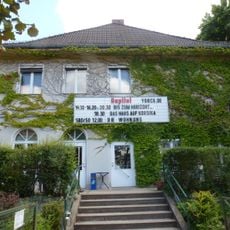
The building is located at Ihnestraße 22 in Berlin's Dahlem neighborhood and can be seen from the street, though it is not operated as a museum today. Check ahead if special tours or openings are available, as the interior is normally not open to the public.
The institute did not just conduct theoretical studies but also performed measurements and comparisons on living people, which are now considered ethically unacceptable. These hands-on experiments reveal how pseudoscience can cause direct harm to real individuals.
The community of curious travelers
AroundUs brings together thousands of curated places, local tips, and hidden gems, enriched daily by 92,529 contributors worldwide.