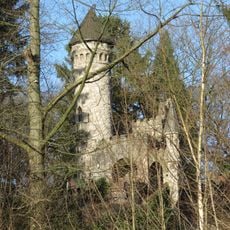
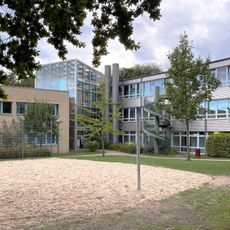
Wellingsbüttel Manor, Baroque manor house in Wellingsbüttel, Hamburg, Germany.
Wellingsbüttel Manor is a nine-axis baroque manor house built around 1750 beside the Alster, with a timber-framed gatehouse added in 1757 by Eutin court architect Georg Greggenhofer. The listed ensemble stands in the Alstertal nature reserve; the gatehouse houses the Alstertalmuseum.
Wellingsbüttel was first recorded on 10 October 1296, when the Holstein counts Adolf V and John II confirmed its sale to Harvestehude Abbey. In 1643 Chancellor Dietrich Reinking received it as a fief, and after the Peace of Westphalia he claimed imperial immediacy, which lasted until 1806. In 1810 Duke Friedrich Karl Ludwig of Schleswig-Holstein-Sonderburg-Beck made it a Danish chancellery manor with its own manor court.
The gatehouse, built in 1757 by Eutin court architect Georg Greggenhofer as a timber-framed structure, now houses the Alstertal Museum. Its exhibits cover the Upper Alster valley, and the building stands with the manor house as a listed monument on the Alster's bank in the Alstertal nature reserve.
The building functions as a private nursing home, so visitors should check beforehand about access and what may be available to see. The on-site restaurant offers a way to visit the property and experience the historical architecture from within.
Friedrich Karl Ludwig, Duke of Schleswig-Holstein-Sonderburg-Beck and an ancestor of the British royal family, lived and died within these walls. This connection to European royalty adds a lesser-known dimension to the property's history.
The community of curious travelers
AroundUs brings together thousands of curated places, local tips, and hidden gems, enriched daily by 93,289 contributors worldwide.