Burg Lauenrode, Medieval castle ruins in Hanover, Germany
Burg Lauenrode was a castle built around 1215 on the Leine island of Brühl, on the western bank opposite the Beginenturm of Hanover's city wall. Documented parts from 1254 include a bailey, a bergfried, the St. Galli chapel, a palas and a kemenate, plus the Brückmühle and Klickmühle mills. No building remains survive, and the castle mound's earth was removed; the site is near the former Preussag administration building at Leibnizufer.
The fortress was built around 1215 for the Counts of Roden and served as an important center of power in the region. Citizens of Hanover destroyed it in 1371 during conflicts between the city and local noble families.
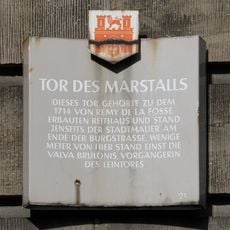
The castle gave its name to Conrad II, who from 1215 called himself 'von Lauenrode' and made it the seat of his rule over Hanover. From 1241 the castle was maintained by the territorial lord as a protective fortress for the city, with the citizens paying the castle garrison. The Bergstraße, later laid out on the raised castle hill, was destroyed in the air raid of 9 October 1943.
No visible structures from the original fortress remain today, and the site is located near the former Preussag administration building at Leibnizufer. Visitors should expect only the modern street area and surroundings to mark the historical location.
The castle hill was levelled around 1540, and its earth was used to build the Hohe Ufer embankment on the opposite bank of the Leine. The street later called Bergstraße, named after the raised hill, ran over the former castle site until it disappeared in the postwar rebuilding.
The community of curious travelers
AroundUs brings together thousands of curated places, local tips, and hidden gems, enriched daily by 93,353 contributors worldwide.