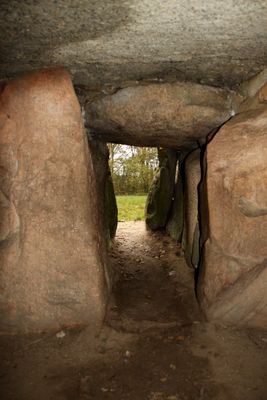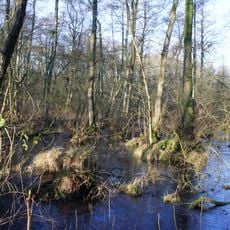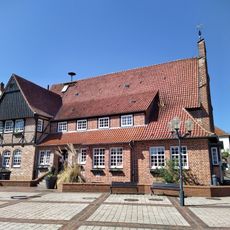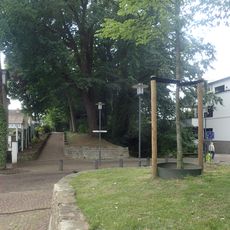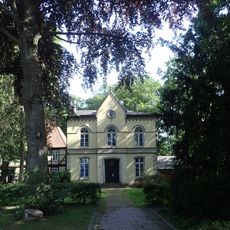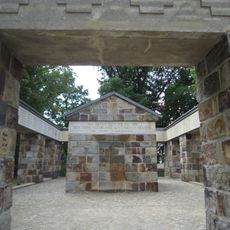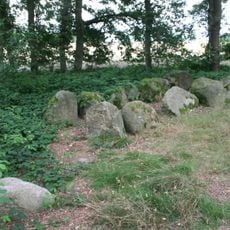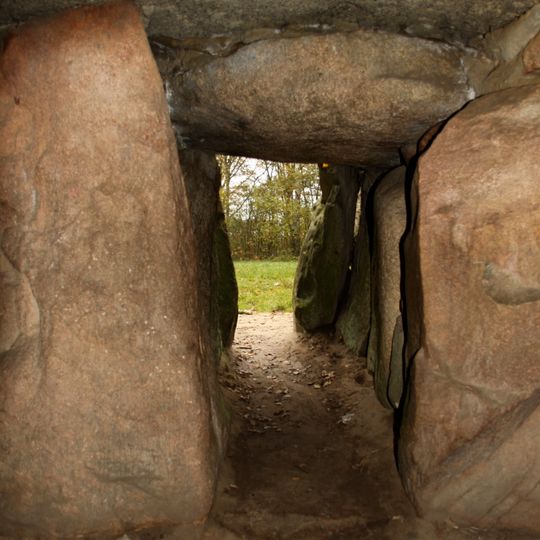
Kleinenknetener Steine, Passage grave in Kleinenkneten, Wildeshausen, Germany.
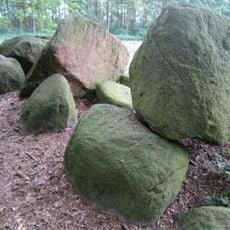
The Kleinenknetener Steine is a megalithic complex with three burial chambers enclosed by approximately 85 stone boulders arranged in an earthen mound. The layout shows the typical structure of such monuments, with multiple chambers positioned side by side beneath a single covering.
The monument was built during the Neolithic period by the Funnel Beaker Culture around 3500 to 2800 BCE in this region. Systematic excavations in the 1930s revealed the structure and its significance as a burial site used by early farming communities.
The name comes from the nearby settlement and reflects the Funnel Beaker Culture that buried their dead here. Visitors can still observe how the large stones are arranged in a distinctive pattern, revealing how these early builders worked with the materials at hand.
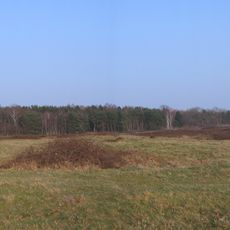
The site lies south of Wildeshausen near Kleinenkneten and is freely accessible along a walking path. The flat terrain makes it easy to visit, though sturdy footwear is advisable when the ground is wet or muddy.
The second chamber displays unusual variations in stone shape and arrangement, showing how builders adapted to limited material availability. Such inconsistencies are less common among other megalithic monuments of the era, offering insight into the practical challenges of construction.
The community of curious travelers
AroundUs brings together thousands of curated places, local tips, and hidden gems, enriched daily by 92,406 contributors worldwide.