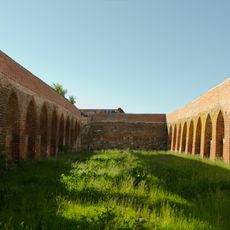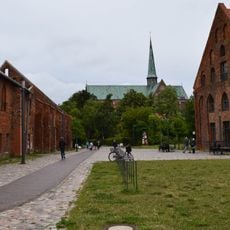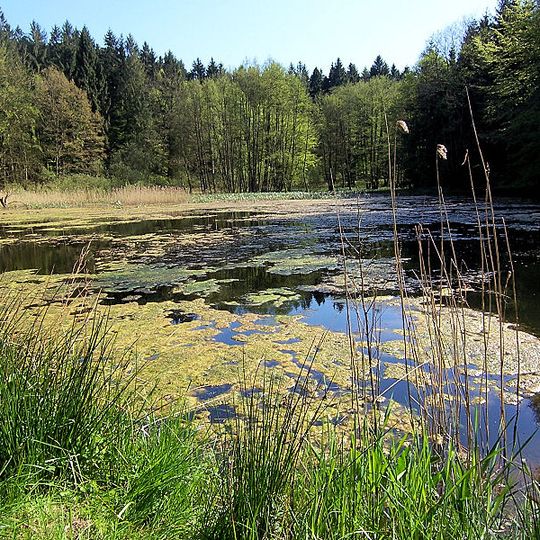
Hütter Klosterteiche, Protected nature reserve in Bartenshagen-Parkentin, Germany.
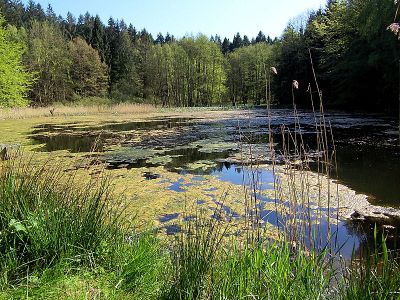
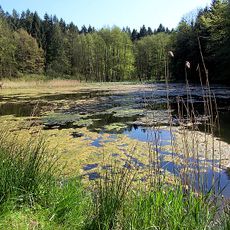
Hütter Klosterteiche is a protected nature reserve in northern Germany composed of interconnected ponds, waterlogged meadows, and stands of alder trees. The landscape consists of water bodies of varying sizes interspersed with wetland vegetation and dense forest, creating a layered habitat system.
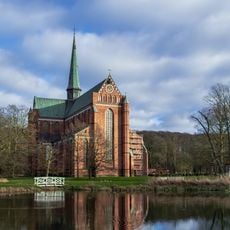
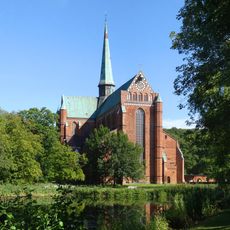
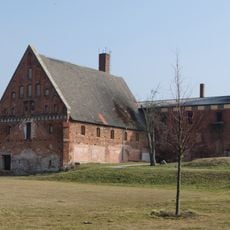
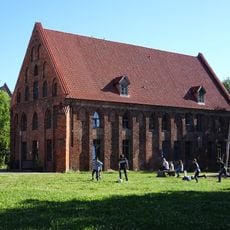
The ponds were first recorded in 1268 when Doberan Monastery began using them for fish farming until around 1552. The Reformation period led to the monastery's decline and abandonment of the ponds, after which the area eventually received formal protection.
The name reflects the monastery that once established fish ponds here for food and resources. Today, information boards along walking routes explain how the local ecosystems work and why protection matters.
The reserve can be walked on established paths that connect observation points and viewing areas throughout the site. Visitors should dress for changeable weather since the ground remains damp in most sections and the open landscape offers little shelter from wind or sun.
Between 2003 and 2005, a restoration project renewed dam structures and repaired damaged sections, significantly improving habitat quality. This work demonstrates how wetland areas can be deliberately regenerated to restore their ecological functions.
The community of curious travelers
AroundUs brings together thousands of curated places, local tips, and hidden gems, enriched daily by 91,360 contributors worldwide.