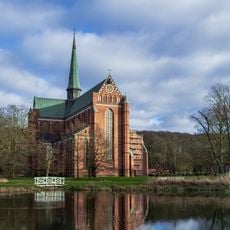
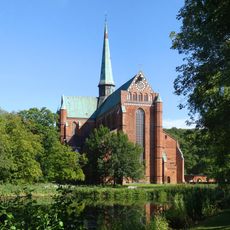
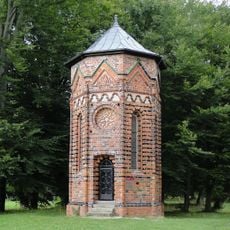
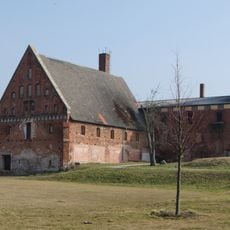
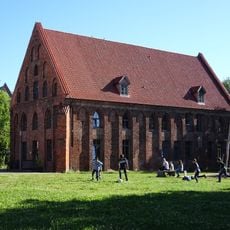
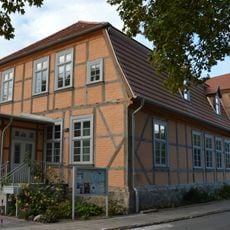
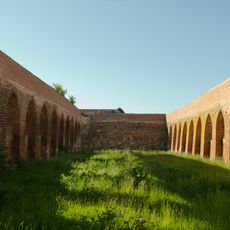
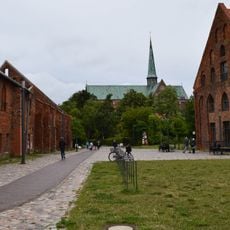
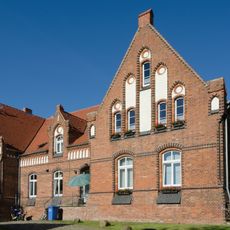
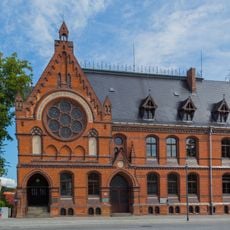
Kapelle Althof, Brick Gothic chapel in Althof, Germany.
Kapelle Althof is a two-bay brick chapel with a cross-ribbed vault and a 5/8 polygonal choir at the east end. Its core dates probably from the 14th century, built over the grave of Woizlawa, while the west gable was redesigned in Neo-Gothic style by Gotthilf Ludwig Möckel between 1886 and 1888. The chapel stands on a hill at the eastern edge of Althof, a district of Bad Doberan.
The chapel was founded in 1171 when twelve Cistercian monks from Amelungsborn Monastery established a religious settlement under Abbot Conrad's guidance. This founding marked the start of its long history as a spiritual center in the region.
The chapel is the cradle of Doberan Monastery: on 1 March 1171 twelve Cistercians from Amelungsborn under Abbot Conrad settled here, supported by 25 lay brothers. Woizlawa, wife of Prince Pribislaw, was buried here in 1172. The building later served as a bakehouse until 1820, and services have been held again since 1886–88.
The chapel stands on a hill at the eastern edge of Althof, in Bad Doberan. It was closed in spring 2009 because of an acute risk of collapse and reopened on 30 October 2010 after two years of securing and restoration work. The altar, the only older piece of furnishing, came from Doberan Minster.
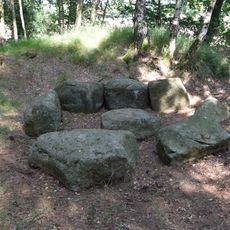
In front of the chapel stands a sacrificial stone (Opferstein) linked to the Slavic uprising of 1179, when the monastery at Althof was devastated on 10 November. It is the one visible trace of that conflict at the site; the monastery itself was moved to Doberan in 1186.
The community of curious travelers
AroundUs brings together thousands of curated places, local tips, and hidden gems, enriched daily by 93,578 contributors worldwide.