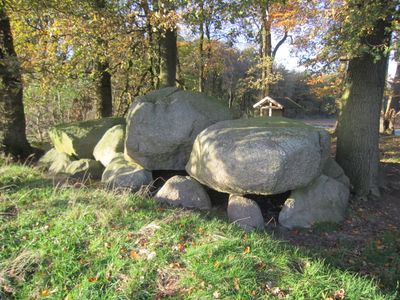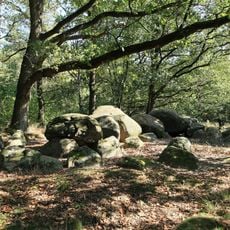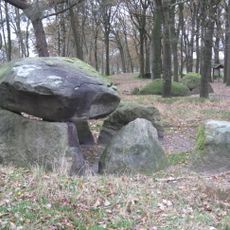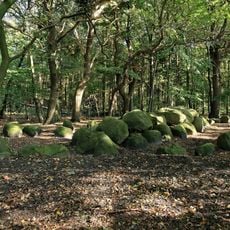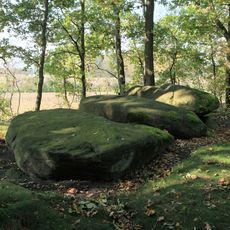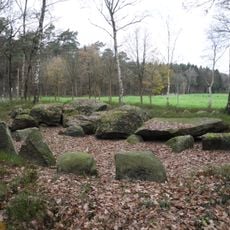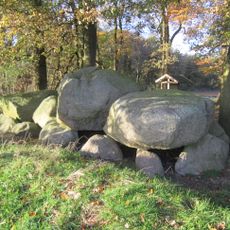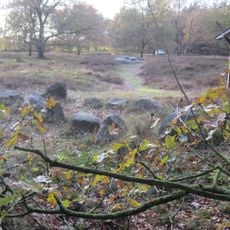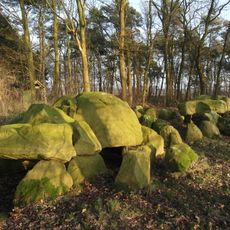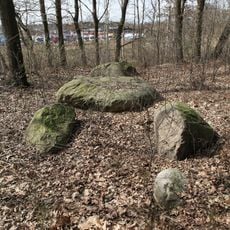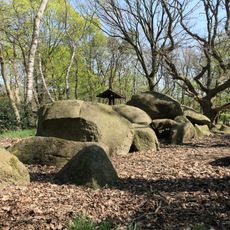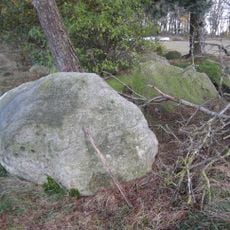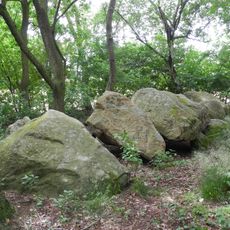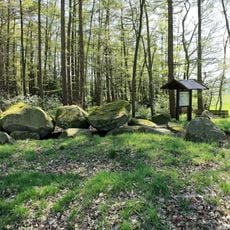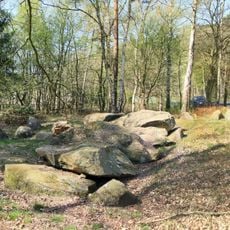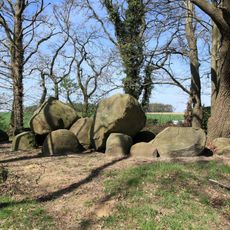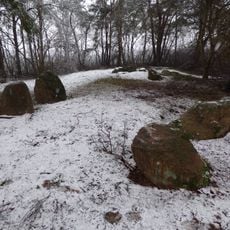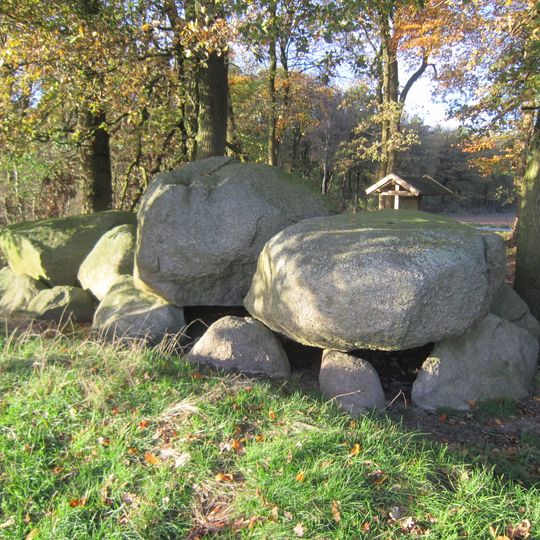
Hünengräberstraße des Hümmling, Neolithic dolmen path in Groß Berßen, Germany.
Hünengräberstraße des Hümmling is a walking route through Groß Berßen that connects several prehistoric megalithic graves spread across a sandy glacial landscape. The path passes about ten to fifteen surviving stone burial chambers of varying sizes, each showing the typical construction style of Neolithic grave culture in this region.
These graves were built between 3500 and 2800 BCE by the Funnel Beaker culture, an ancient people who lived across northern Europe and buried their dead beneath stone chambers. The concentration of so many structures in one area suggests this site served as an important burial ground for multiple generations.
The name 'Hünengräberstraße' comes from the word 'Hünen', an old term for giants, referring to the belief that only giants could have built such massive structures. Walking the path today, you see these stone chambers scattered across the landscape as permanent markers of how Neolithic people chose to honor their dead.
A central parking area between Groß Berßen and Hüven offers the most convenient starting point for exploring this walking route on foot. The path crosses open terrain, so it is wise to wear weather-appropriate clothing and bring water, as there is little shade along the way.
The Wappengrab features a distinctive capstone whose shape later inspired the design of the Emsland region's coat of arms, creating a lasting link between this ancient burial site and the region's modern identity. It stands out as one of the most recognizable graves along this route.
The community of curious travelers
AroundUs brings together thousands of curated places, local tips, and hidden gems, enriched daily by 60,000 contributors worldwide.