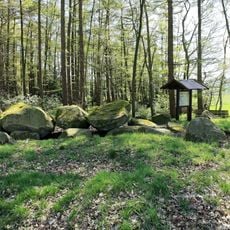
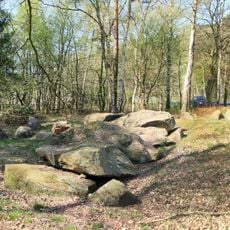
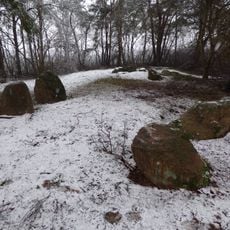
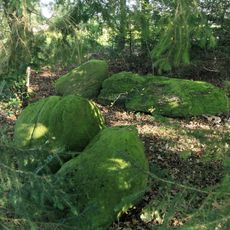
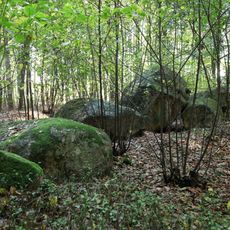
Findling von Hüven, Glacial erratic in Hüven, Germany
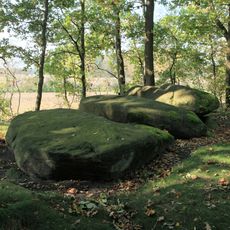
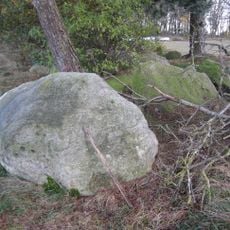
Findling von Hüven is a large Scandinavian boulder located in this part of Lower Saxony. It measures about 5.8 meters long, 4.9 meters wide, and 2.9 meters tall, weighing approximately 102.5 tons.
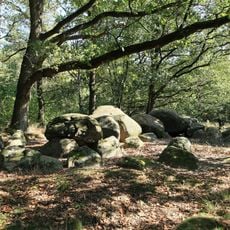
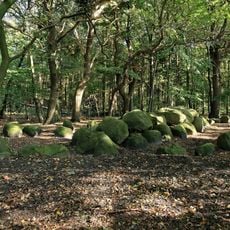
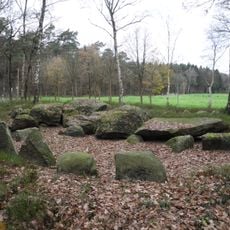
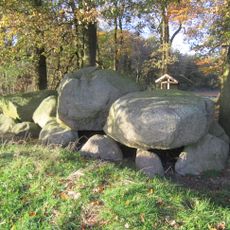
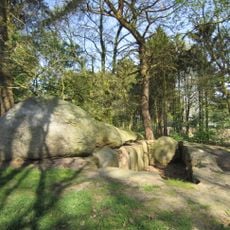
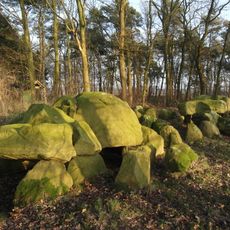
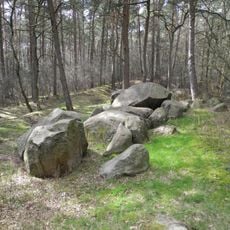
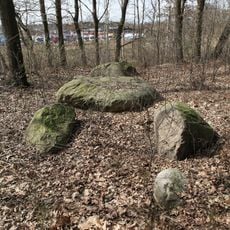
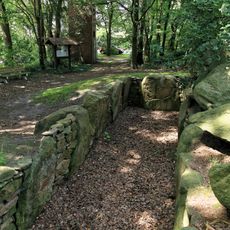
The boulder was carried from Scandinavia to the Hümling ridge by inland ice during the Saale glaciation, roughly 150,000 to 200,000 years ago. Geologists from Lower Saxony's LBEG estimate the rock itself at about one billion years old. From around 3800 BC, Neolithic Funnel Beaker communities used such erratics for megalithic tombs, two of which survive near Hüven.
The rock received its official name in 2021 through a public naming process and is now a recognized natural monument in the Emsland region. Visitors encounter a large boulder that has become part of the local landscape and community identity.
The boulder sits in an easily accessible location with parking available nearby and informational panels explaining its geological story. Visitors can see it freely at any time and walk close to the stone.
This boulder was only uncovered in 2020 and ranks among the four largest glacial erratics in Lower Saxony. Its discovery shows how much can still lie hidden beneath the surface.
The community of curious travelers
AroundUs brings together thousands of curated places, local tips, and hidden gems, enriched daily by 93,965 contributors worldwide.