Pyramid of Menkaure, Egyptian pyramid in Giza, Egypt
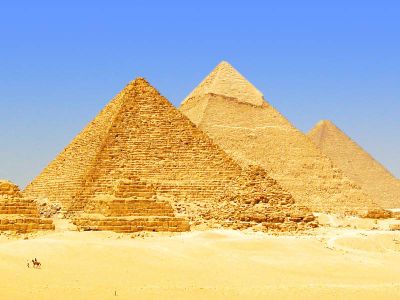
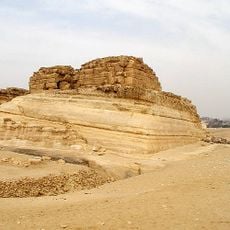
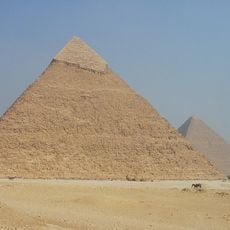
The pyramid of Menkaure is the smallest of the three main pyramids at Giza, now 61 m tall on a base of about 108.5 m, built of local limestone blocks laid in stepped courses. Its lowest sixteen courses were cased in red granite from Aswan, of which only seven remain; a deep vertical gash cut into the northern face exposes the stepped core beneath.
Menkaure's reign is not precisely dated, but the pyramid was probably completed in the 26th century BC. Signs of unfinished work show the king died during construction, leaving completion to his successor Shepseskaf; the granite casing stopped at sixteen to eighteen courses. In 1196 Al-Aziz Uthman, son of Saladin, tried to demolish it and left the great gash on the north face.
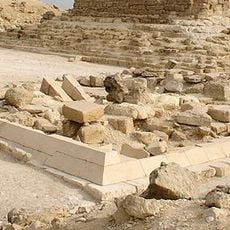
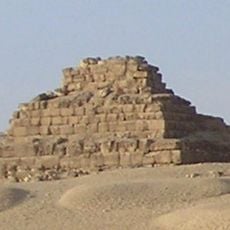
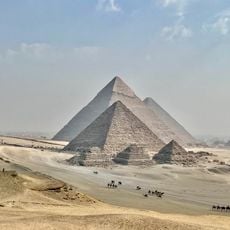
The pyramid was known in its own time as "Divine is Menkaure". Its complex included three queen's pyramids on the south side, a mortuary temple, a valley temple and a causeway linking the two temples. George Reisner, excavating the valley temple in 1908–1910, found statues of Menkaure carved in the naturalistic Old Kingdom style.
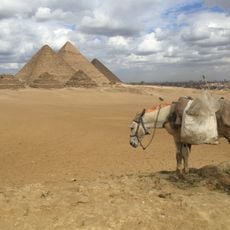
The pyramid stands a few hundred metres southwest of the pyramids of Khafre and Khufu. Its entrance sits in the centre of the northern face, about 4.2 m above the base and almost directly below the great breach cut by Al-Aziz Uthman; the breach itself exposes the stepped internal courses.
The great vertical gash on the northern face was cut in 1196 by Al-Aziz Uthman, son of Saladin, who tried to demolish the Giza pyramids starting with this one; the work was abandoned as too costly. The breach now exposes the stepped core of seven to eight courses that was later filled in and cased as a true pyramid.
The community of curious travelers
AroundUs brings together thousands of curated places, local tips, and hidden gems, enriched daily by 94,072 contributors worldwide.