Great Pyramid of Giza, Ancient Egyptian pyramid in Giza, Egypt
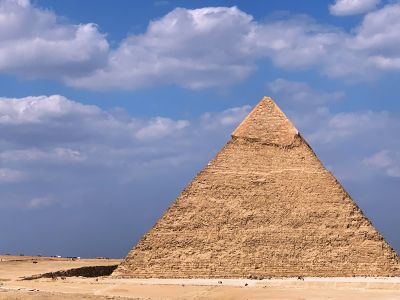
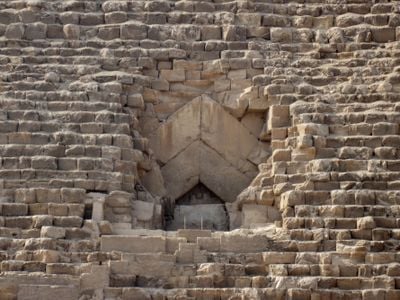
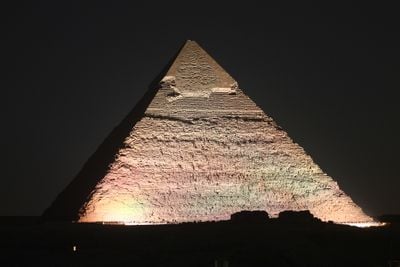
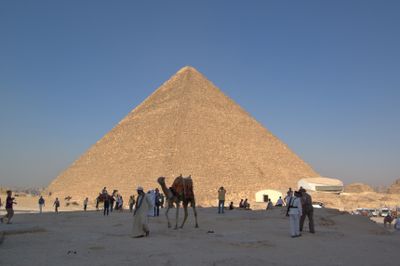
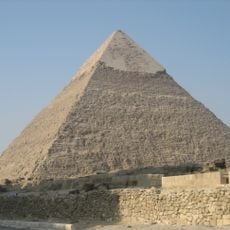
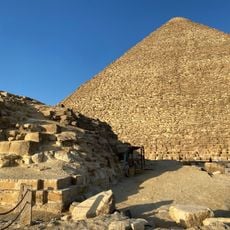
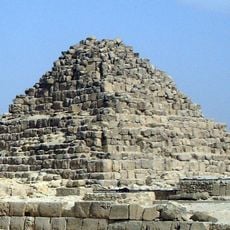
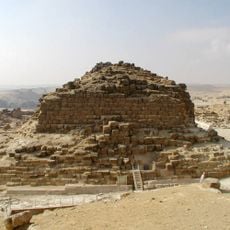
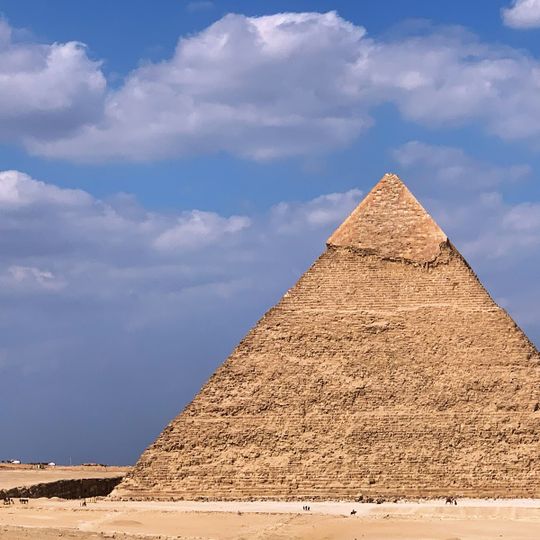
The Great Pyramid of Giza is a four-sided stone structure with a square base tapering to a pointed top, built from horizontal layers of rough tan and light-brown limestone blocks. Its faces show a stepped, textured surface of rectangular blocks, and along the central vertical edge the blocks are uneven and broken, forming a jagged seam. The base rests on flat, pale sand and stone.
It was erected around 2560 BCE as a burial place for Pharaoh Khufu and marked the peak of ancient Egyptian pyramid construction. The work required the effort of tens of thousands of laborers over a period that probably spanned two decades.
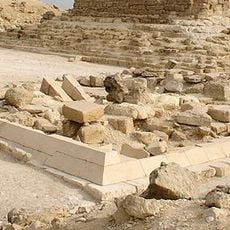
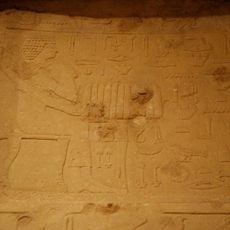
Khufu named his funerary complex Akhet Khufu, "The Horizon of Khufu". The pyramid's chambers hold no decoration, only work-gang graffiti in red paint naming gangs such as "The white crown of Khnum-Khufu is powerful". The pyramid temple was dedicated to Khufu's Sed festival, his 30th jubilee, and its reliefs show Khufu, priests and officials performing rituals.
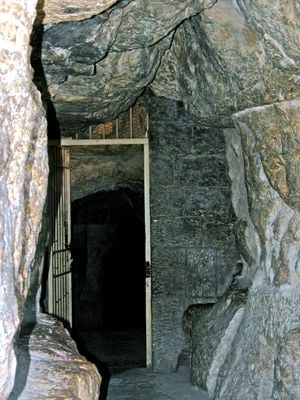
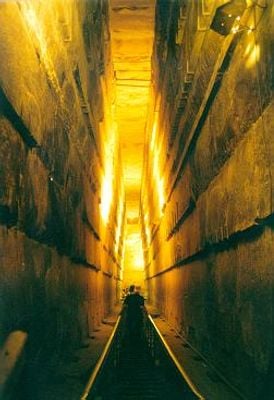
A visit in the early morning helps avoid the strongest heat and the largest crowds, and you should be ready for uneven surfaces and steep paths. Those wishing to enter the interior must manage narrow, low passages that require physical fitness and patience.
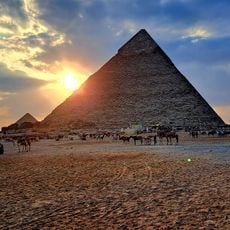
It remains the only surviving structure of the Seven Wonders of the Ancient World and was the tallest human-made building on Earth for nearly four millennia. The original white limestone casing that gave it a smooth surface has mostly disappeared today, exposing the underlying steps.
The community of curious travelers
AroundUs brings together thousands of curated places, local tips, and hidden gems, enriched daily by 92,081 contributors worldwide.