Pyramid of Khafre, Egyptian pyramid in Giza, Egypt
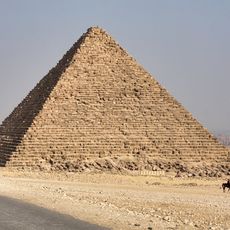
The Pyramid of Khafre is a smooth-sided structure in Giza rising 143.5 m (471 ft) in height with a base width of 215 m (705 ft). Each face ascends at an angle of approximately 53 degrees, giving the structure a steeper appearance than its neighbor in the necropolis.
Construction took place between 2558 and 2532 BCE during the Fourth Dynasty under Pharaoh Khafre, son of Khufu. The tomb arose as part of a dynastic tradition in which each ruler commissioned a separate pyramid.
The complex includes a valley temple at the edge of the former plateau and a mortuary temple directly against the eastern face, once connected by a covered causeway. The causeway carried funeral processions upward from the valley and served as a processional route for priests and royal officials during burial ceremonies.
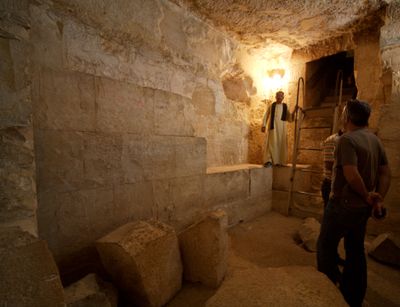
Visitors enter through a tunnel created during Roman times, leading to chambers and passageways carved from limestone blocks inside. The walk down and back requires stooping in low sections, so be prepared for confined spaces.
Portions of the original polished limestone casing remain at the apex, while most other pyramids have lost this outer layer. The surviving pieces show how smooth and bright the entire surface once looked.
The community of curious travelers
AroundUs brings together thousands of curated places, local tips, and hidden gems, enriched daily by 91,369 contributors worldwide.