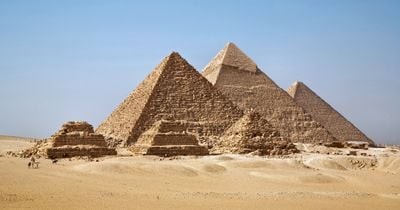
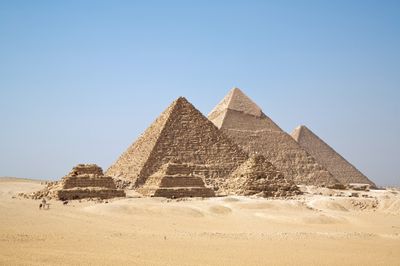
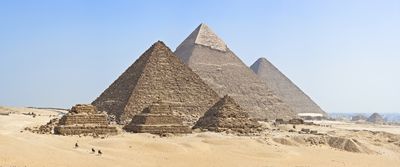
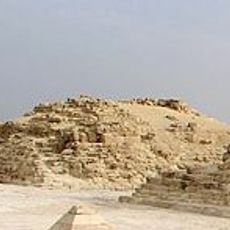
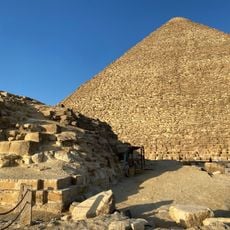
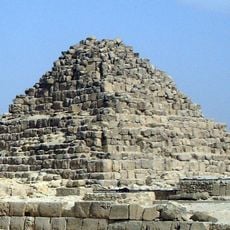
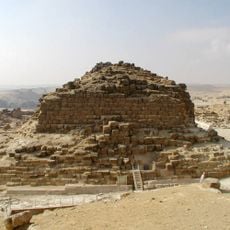
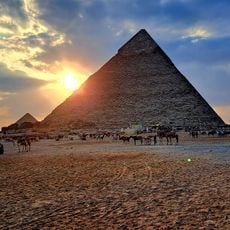
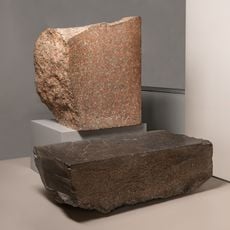
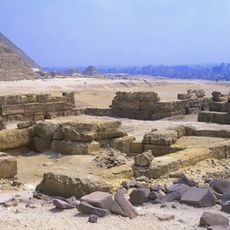
Giza pyramid complex, Archaeological site in Giza Governorate, Egypt.
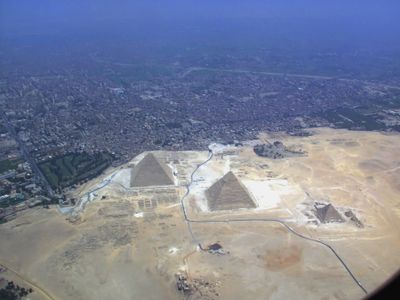
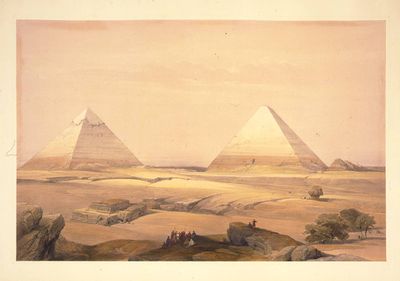
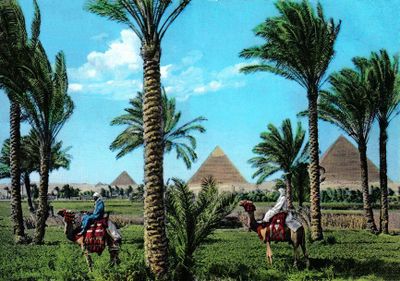
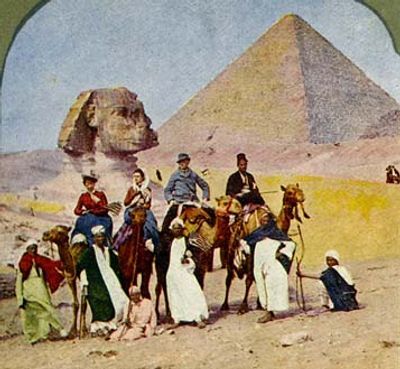
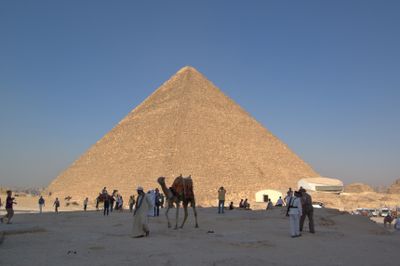
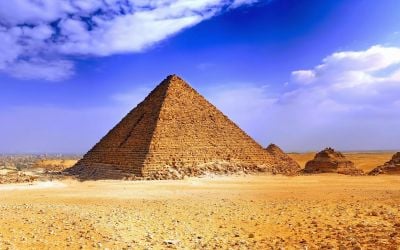
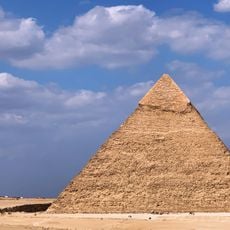
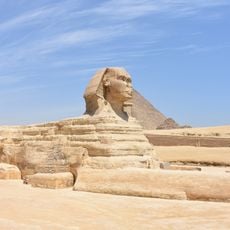
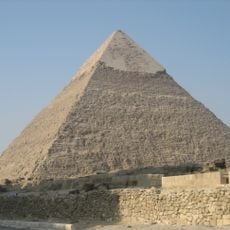
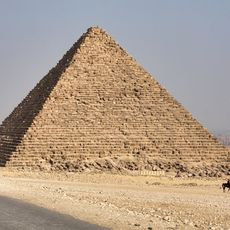
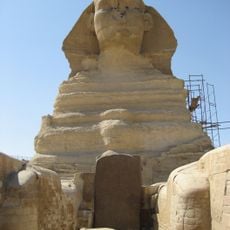
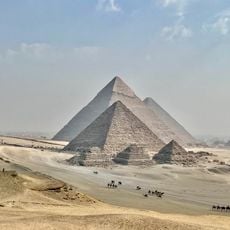
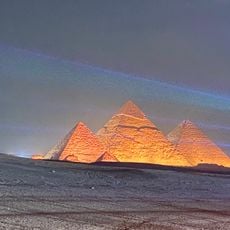
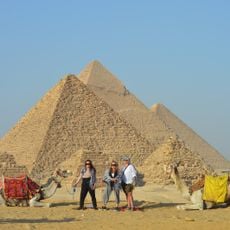
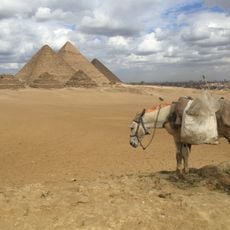
The Giza pyramid complex is a necropolis in Giza Governorate, Egypt, containing three large limestone burial monuments along with smaller tombs and temples on a raised plateau. Each of the three main pyramids is surrounded by temples, courtyards, and tombs built for members of the royal families and high officials.
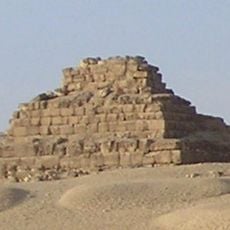
The three main pyramids were built during the Fourth Dynasty, between about 2600 and 2500 BC: Khufu's Great Pyramid first, then Khafre's and Menkaure's. The plateau had already served as a cemetery since the First Dynasty, and the pyramid builders added queens' pyramids, temples, causeways and workers' villages. The site was largely abandoned after the Old Kingdom.
The complex takes its name from the nearby city and was built for three rulers and their families, with temples for rituals after death. Priests carried out ceremonies here for generations, while stonemasons and workers lived and worked in settlements at the edge of the site.
The site lies on the Giza Plateau about 9 km west of the Nile and 13 km southwest of central Cairo. The ground between the pyramids is sandy and uneven, and the plateau is exposed, so bring water and sun protection. The Great Pyramid's interior passages are low and steep; the plateau paths are not step-free.
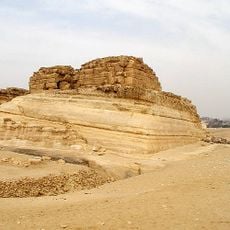
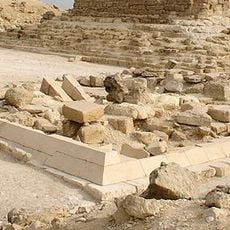
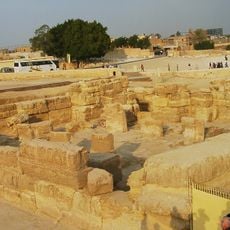
The site is aligned so that the sides of the largest pyramid face almost exactly toward the four cardinal directions, with a deviation of less than one tenth of a degree. Those who walk through the grounds often notice traces of old ramps and quarries that show how material was processed on location.
The community of curious travelers
AroundUs brings together thousands of curated places, local tips, and hidden gems, enriched daily by 92,168 contributors worldwide.