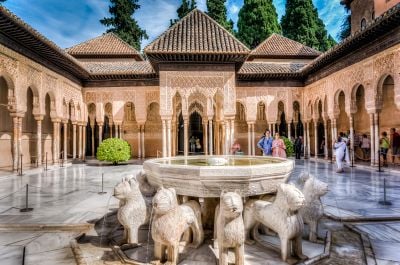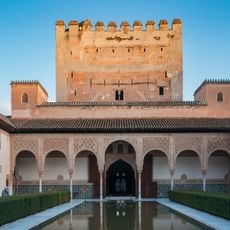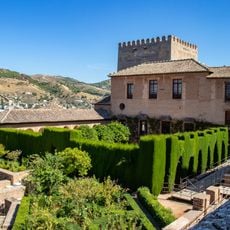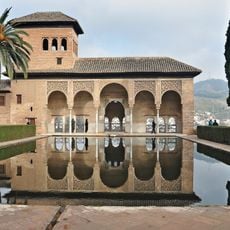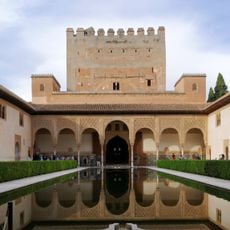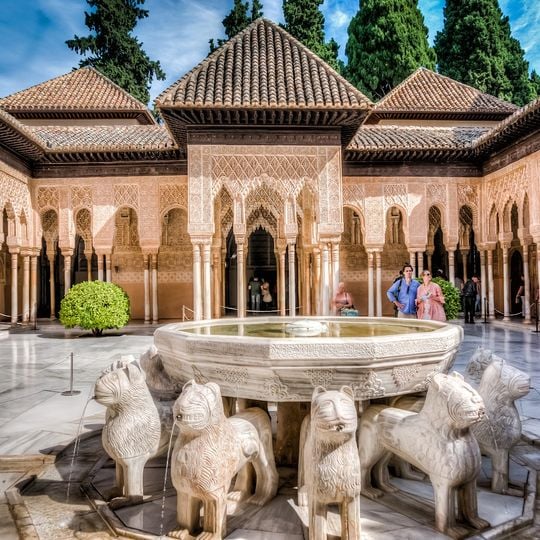
Court of the Lions, Islamic courtyard in Alhambra, Spain
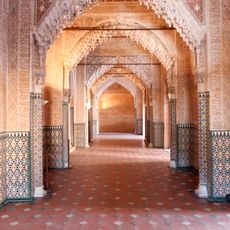
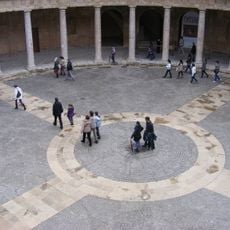
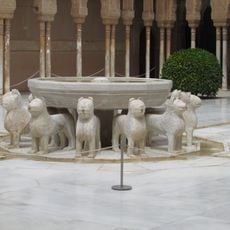
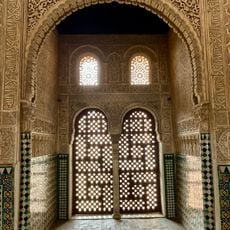
The Court of the Lions is a rectangular courtyard at the heart of the Alhambra, measuring 35 by 20 metres. A low gallery of 124 white Macael marble columns, set singly and in groups of two, three or four, runs around it, with two square pavilions projecting into the court on the east and west sides. In the centre, a white alabaster basin rests on the backs of twelve carved lions.
Muhammad V built the palace after returning from exile, with the Hall of the Two Sisters finished in 1362 or between 1362 and 1365 and the rest, according to Felix Arnold, between 1377 and 1390. The site had been part of a garden or riad, and the palace stood independent of the Comares Palace, with its own street entrance. The Nasrid dynastic mausoleum, the Rawda, lay across a narrow street to the south; only its foundations remain.
The name "Court of the Lions" is a modern label taken from the twelve lion figures around the fountain; the palace's Nasrid-era name is unknown, though Qasr ar-Riyad ("Palace of the Garden") has been proposed. Poems by Ibn Zamrak, Muhammad V's vizier, are carved on the basin and throughout the halls.
The courtyard is open to visitors daily, with hours varying by season. Entry is included with Alhambra admission, and visiting early in the day helps avoid the largest crowds.
The twelve lions are not the only sculptures to look for: the fountain's white marble basin is traditionally said to have come from the house of the Granadan poet Ibn Zamrak, whose verses are carved around the hall walls. The basin rests on the lions' backs, and the poet's own qasida compares the water to a hand held out to the sultan.
The community of curious travelers
AroundUs brings together thousands of curated places, local tips, and hidden gems, enriched daily by 94,851 contributors worldwide.