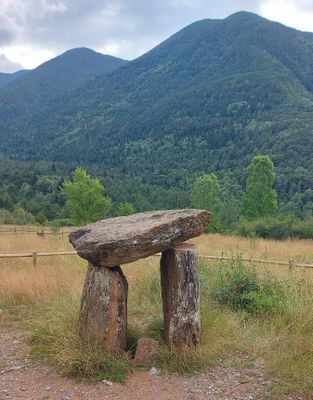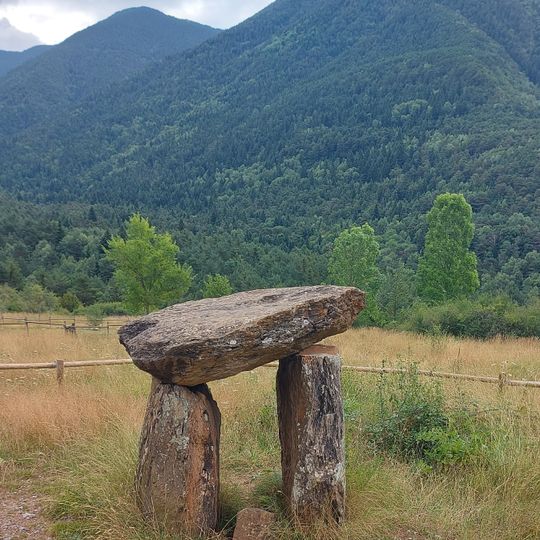
Dolmen de Santa Elena, Neolithic dolmen near Biescas, Spain.
Dolmen de Santa Elena is a megalithic structure made of large stone slabs arranged to form a burial chamber positioned at the entrance to Valle de Tena. The construction demonstrates the technical skills of these early peoples in quarrying and positioning massive stones.
The megalithic structure was built around 3000 BCE during the Neolithic period when herding communities inhabited the Pyrenees. Excavations in 1931 uncovered arrowheads, necklaces, and flint knives that provide evidence of how these ancient people lived.
The structure served as a burial chamber for early herding communities who lived scattered across the Pyrenees. Visitors can observe how these ancient peoples used stone constructions to honor their dead, reflecting their deep ties to the mountain landscape.
The site sits approximately 4 kilometers north of Biescas with informative panels and protective barriers in place. The location is straightforward to access and on-site information explains the archaeological importance of the structure.
The site actually contains two dolmens, with the second structure rediscovered in 2018 beneath rubble at a former quarry location. This discovery expanded understanding of how widespread such burial practices were across the region.
The community of curious travelers
AroundUs brings together thousands of curated places, local tips, and hidden gems, enriched daily by 60,000 contributors worldwide.