Louvre Colonnade, Classical colonnade at Louvre Palace, France.
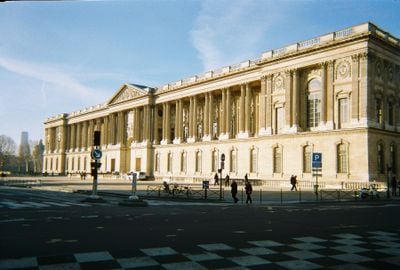
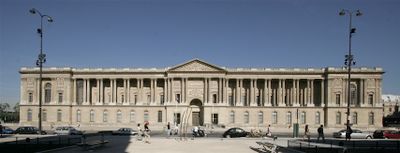
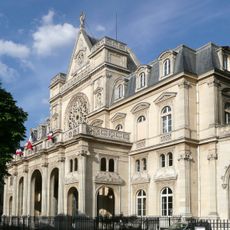
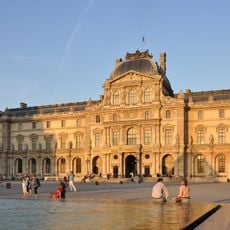
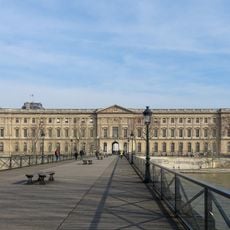
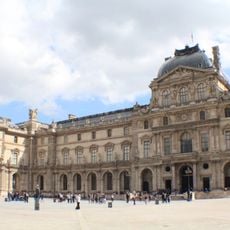
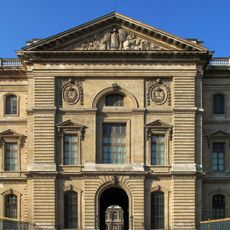
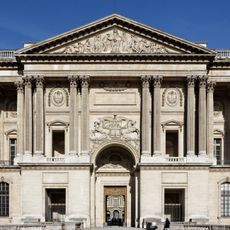
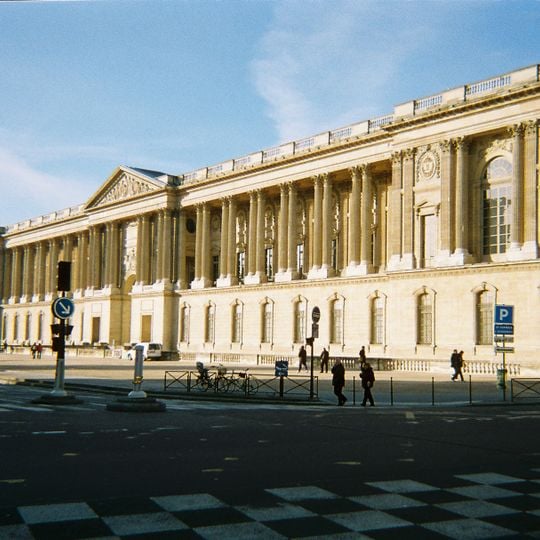
The Louvre Colonnade is the eastern outer facade of the Louvre Palace in the Saint-Germain-l'Auxerrois neighborhood of Paris, lined with a long row of paired Corinthian columns. The facade closes off the Sully Wing and is framed by a central projecting section with a pediment that breaks up the long run of columns.
The colonnade was built between 1667 and 1674 under Louis XIV, following a design by Claude Perrault, who was given the commission after the king rejected the earlier proposal by the Italian architect Bernini. This break with the dominant Italian influence of the time was a deliberate choice in favor of a French approach to architecture.
The central pediment shows a sculptural group with Minerva surrounded by the Muses of Victory, reflecting France's ambitions in art and power during the reign of Louis XIV. Visitors looking at the facade from the square naturally read this composition as the crowning point of the long row of columns.
The colonnade faces the public Place du Louvre and is easy to reach on foot without entering the museum. Walking the full length of the facade is worthwhile, as the paired columns produce different visual effects depending on where you stand.
Although the colonnade was presented as a finished work, it stood largely incomplete for nearly a century after construction stopped, as Louis XIV shifted his attention and funds to Versailles. The base of the facade was not properly finished until the 1780s, under Louis XVI, long after the upper section had been celebrated as a model of French architecture.
The community of curious travelers
AroundUs brings together thousands of curated places, local tips, and hidden gems, enriched daily by 90,738 contributors worldwide.