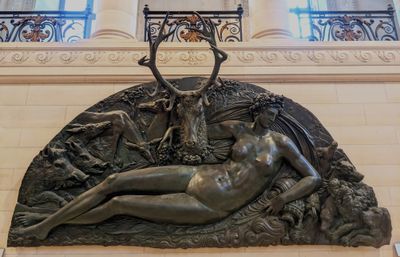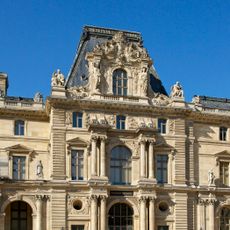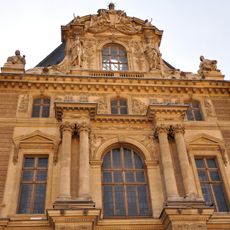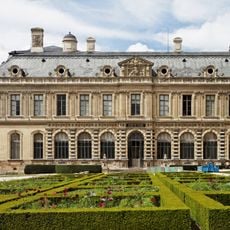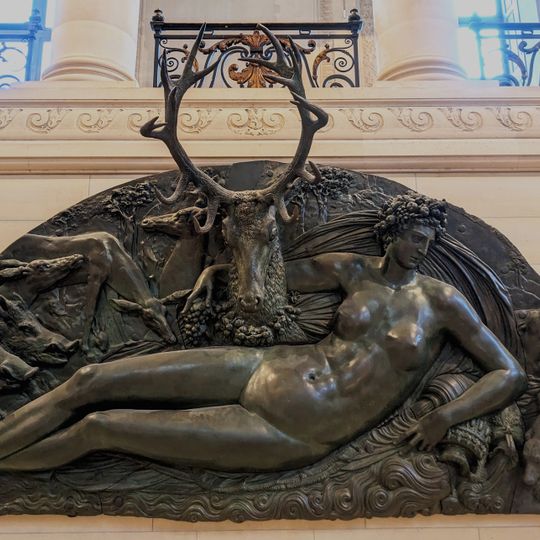
Fontainebleau Nymph, Bronze relief sculpture at Escalier Mollien, Louvre Museum, France
The Fontainebleau Nymph is a bronze relief at the Louvre in Paris, showing a reclining female figure nearly life-size at about 6 feet 9 inches (205 cm) tall and 13 feet 5 inches (409 cm) wide. A stag rests beside her head while boars and hunting dogs fill the surrounding space.
The relief was made in the mid-16th century by Benvenuto Cellini for the entrance of the Château d'Anet, a royal hunting residence. It later passed through several royal collections before arriving at the Louvre, where it was placed on the Mollien Staircase.
The reclining figure was originally made for the entrance gate of the Château d'Anet and carries the hunting symbolism of the French royal court. The stag and boars surrounding her reflect how hunting was seen as a royal activity, not just a sport.
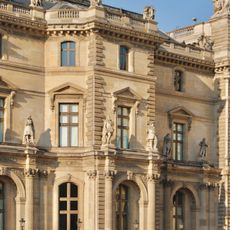
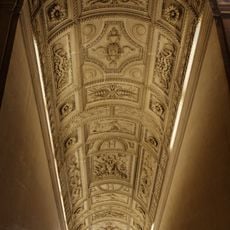
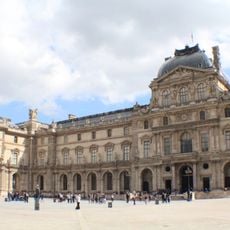
The relief sits on the Mollien Staircase inside the Louvre, making it easy to see while moving between galleries. Arriving early in the day helps avoid the largest crowds and allows a calmer view of the work.
The relief was not cast as a single piece but assembled from several separate bronze sections joined together. The seams between these sections are still visible on close inspection, giving a rare look at how large-scale bronze works were made in the 16th century.
The community of curious travelers
AroundUs brings together thousands of curated places, local tips, and hidden gems, enriched daily by 90,917 contributors worldwide.