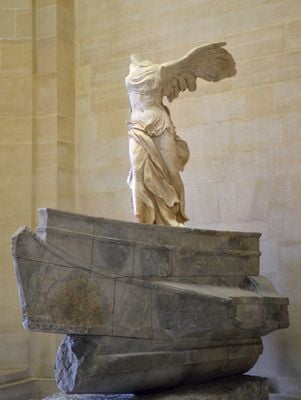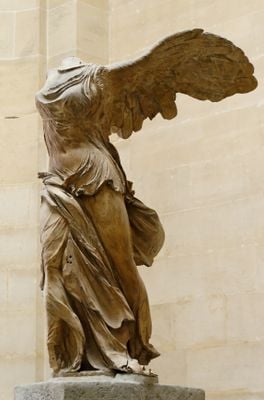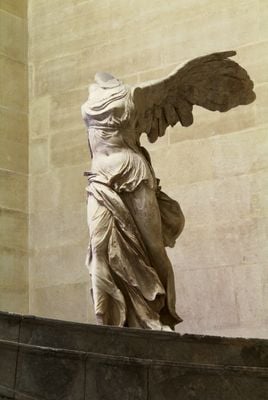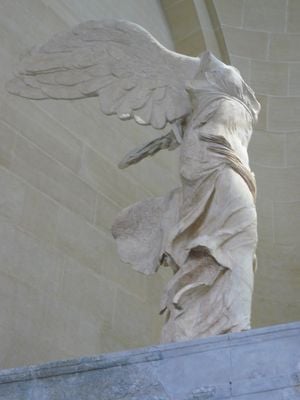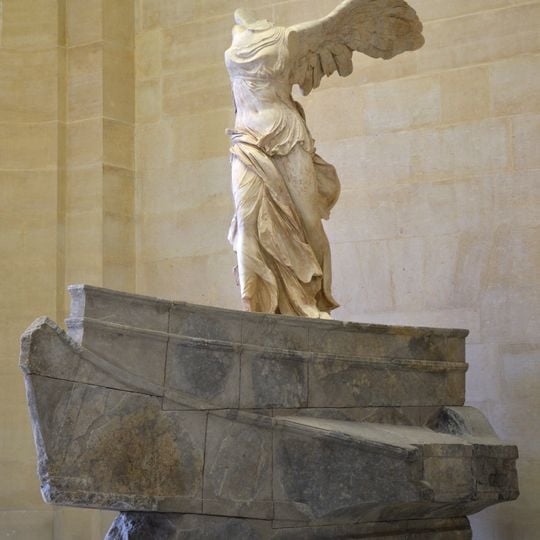
Winged Victory of Samothrace, Hellenistic statue at Daru Staircase in Louvre Museum, France
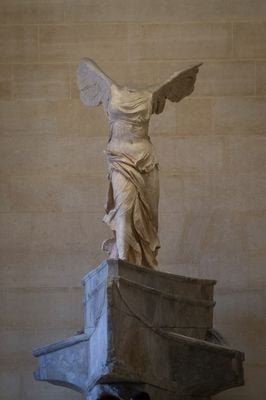
The Winged Victory of Samothrace is a Hellenistic marble statue of the goddess Nike, displayed on the Daru staircase in the Louvre in Paris. The headless, armless figure wears deeply carved, clinging drapery and stands on a grey stone base shaped like a ship's prow, with her right wing extending outward.
Charles Champoiseau discovered fragments of the sculpture in 1863 during excavations on Samothrace and brought them to France in 1864. The work was created around 190 BCE and once stood in a sanctuary on the island.
The sculpture shows the winged goddess of triumph on a ship prow with wind-blown clothing as a symbol of victory at sea. Her name refers to the Greek island of Samothrace, where she was found and originally stood in a sanctuary.
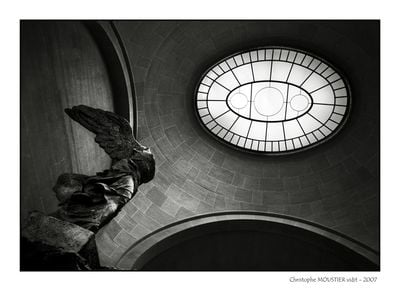
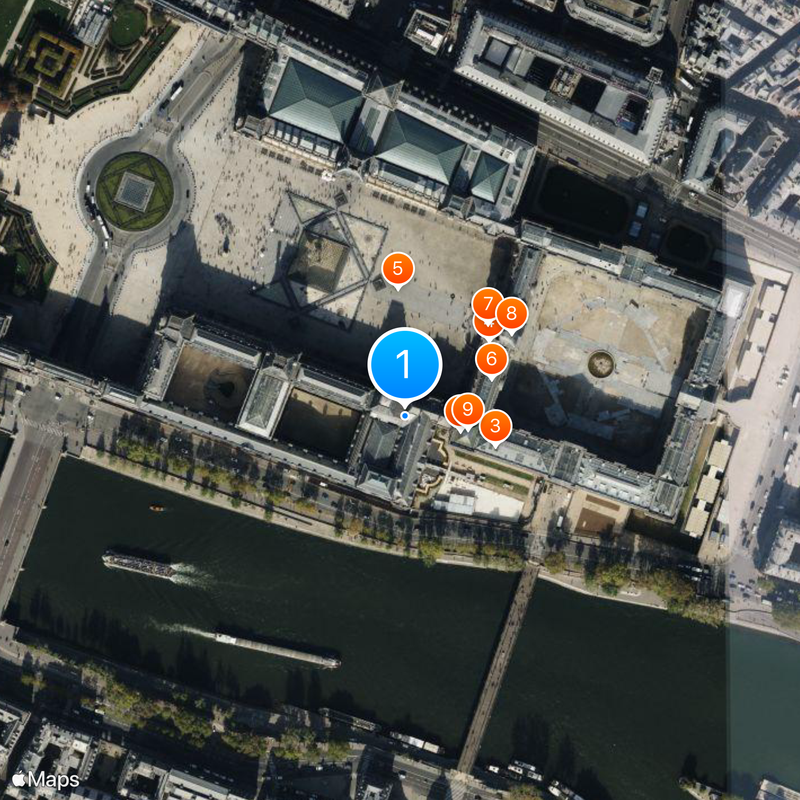
The figure stands in room 703 of the Louvre and is visible from several angles while climbing the Daru staircase. The view from below gives the impression that the goddess is about to land.
The base is made of gray Lartos marble shaped as a ship prow, while the figure itself is formed from white marble from the island of Paros. The right wing is a reconstruction based on the preserved left wing.
The community of curious travelers
AroundUs brings together thousands of curated places, local tips, and hidden gems, enriched daily by 92,090 contributors worldwide.