Teen Murti Bhavan, Historical museum in New Delhi, India
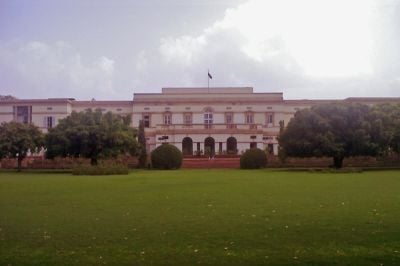
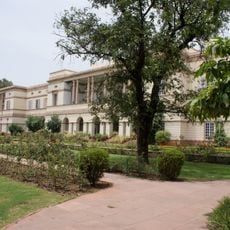
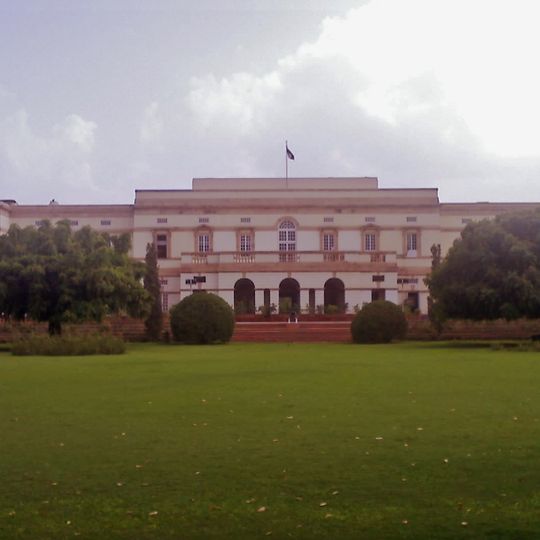
Teen Murti Bhavan is a symmetrical cream-coloured stone and stucco building of 1930, designed by Robert Tor Russell, facing the south side of Rashtrapati Bhavan. Its central block has five deep arched openings at ground level, a balustraded balcony above, and three arched windows under a shallow pediment. Long wings with rectangular windows flank it, and a flagpole rises from the flat roof.
The estate was built in 1930 by architect Robert Tor Russell as the residence for the British Army Commander-in-Chief. After independence, Jawaharlal Nehru lived here until his death in 1964, and the house was then converted into a museum.
The house takes its name from the Teen Murti Memorial at the junction of Teen Murti Marg, South Avenue Marg and Mother Teresa Crescent. Sculptor Leonard Jennings made the life-size figures of three soldiers, installed in 1922 for the Jodhpur, Hyderabad and Mysore Horse of the 15th Imperial Service Cavalry Brigade, which fought at Haifa. Jodhpur troops under Major Dalpat Singh Shekhawat led the action; he died there and is called the Hero of Haifa.
The museum opens Tuesday through Sunday from 9:00 AM to 5:30 PM and displays personal items, photographs and manuscripts from Nehru's life and political career. The grounds cover a large area, so expect some walking between the exhibition rooms and garden sections.
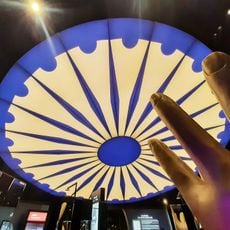
Before the Nehru Planetarium was built, its site held a tennis court where Rajiv Gandhi and his brother Sanjay played as teenagers. Indira Gandhi conceived the planetarium to encourage science among children; it opened on 6 February 1984 and was reopened in September 2010 after renovations costing Rs. 11 crore.
The community of curious travelers
AroundUs brings together thousands of curated places, local tips, and hidden gems, enriched daily by 93,778 contributors worldwide.